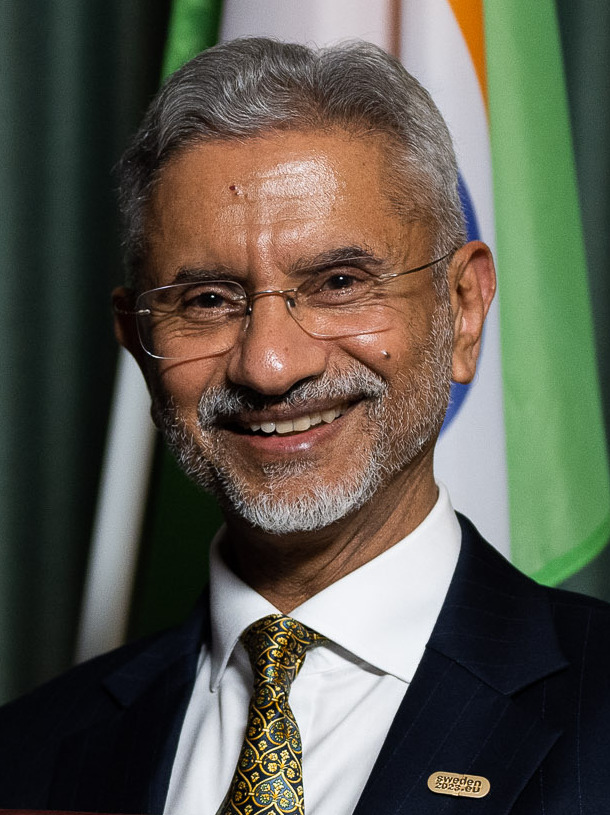
NEW YORK — Nepal’s Foreign Minister Pradeep Kumar Khanal and India’s External Affairs Minister Dr S. Jaishankar met on the sidelines of the United Nations General Assembly on 23 September 2026. The two officials discussed a range of bilateral issues, including a proposed development partnership, renewable‑energy projects and lingering border concerns, and agreed to set up a joint working group to fast‑track implementation.
Both sides stress development partnership amid lingering border concerns
The meeting took place at the UN headquarters after the General Assembly’s plenary session. Both ministers said the dialogue was timely, given the regional focus on climate resilience and economic integration. Jaishankar highlighted India’s commitment to “shared prosperity through sustainable infrastructure,” while Khanal underscored Nepal’s need for “reliable, clean power to fuel growth.”
According to a joint press release, the two leaders signed a memorandum of understanding (MoU) that earmarks ₹12 billion for joint hydro‑electric projects in the Karnali and Mahakali river basins. The MoU also calls for Indian investment in Nepal’s road‑network upgrades, particularly the East‑West Highway corridor, and for a bilateral trade facilitation mechanism to reduce customs clearance time by 30 %.
Energy cooperation formed the core of the talks. Jaishankar announced that Indian firms would conduct feasibility studies for three new 250‑MW hydro‑electric plants, with an expected combined capacity of 750 MW. Khanal welcomed the move, noting that Nepal’s current electricity deficit stands at roughly 1,200 MW and that the new projects could cut imports from Bangladesh by up to 40 %.
Trade and investment were also on the agenda. Both ministers agreed to expand the existing Nepal‑India Trade Promotion Council’s mandate, aiming to increase bilateral trade from the current ₹1.2 trillion to ₹1.5 trillion by 2029. They discussed simplifying the “single window” clearance system for Nepali exporters of agricultural produce, which could boost Nepal’s export earnings by an estimated ₹3 billion annually.
Border management remained a sensitive topic. Khanal raised the long‑standing dispute over the Kalapani region, urging a “peaceful, diplomatic resolution” based on the 1950 Treaty of Peace and Friendship. Jaishankar reiterated India’s willingness to “engage constructively” while emphasizing the need to maintain the status quo until a mutually acceptable solution is reached.
Water‑sharing arrangements were reviewed as part of the broader energy dialogue. Both sides agreed to form a technical committee to monitor the Mahakali River’s flow and to explore joint flood‑control measures. The committee will submit its first report by March 2027.
The ministers concluded the meeting by scheduling a follow‑up session in Kathmandu in early 2027, where senior officials from both ministries will present detailed project proposals. They also pledged to coordinate closely at upcoming multilateral forums, including the SAARC summit in Colombo later this year.
Primary Sources & Official Records
- Foreign Minister Khanal and Indian External Affairs Minister Jaishankar hold talks in New
- Foreign Affairs Minister Khanal and India’s External Affairs Minister Jaishankar hold talk
- Foreign Minister Khanal, Jaishankar discuss Nepal-India ties on UN General Assembly sideli
- Development partnership, energy cooperation in focus during EAM Jaishankar’s meet with Nep