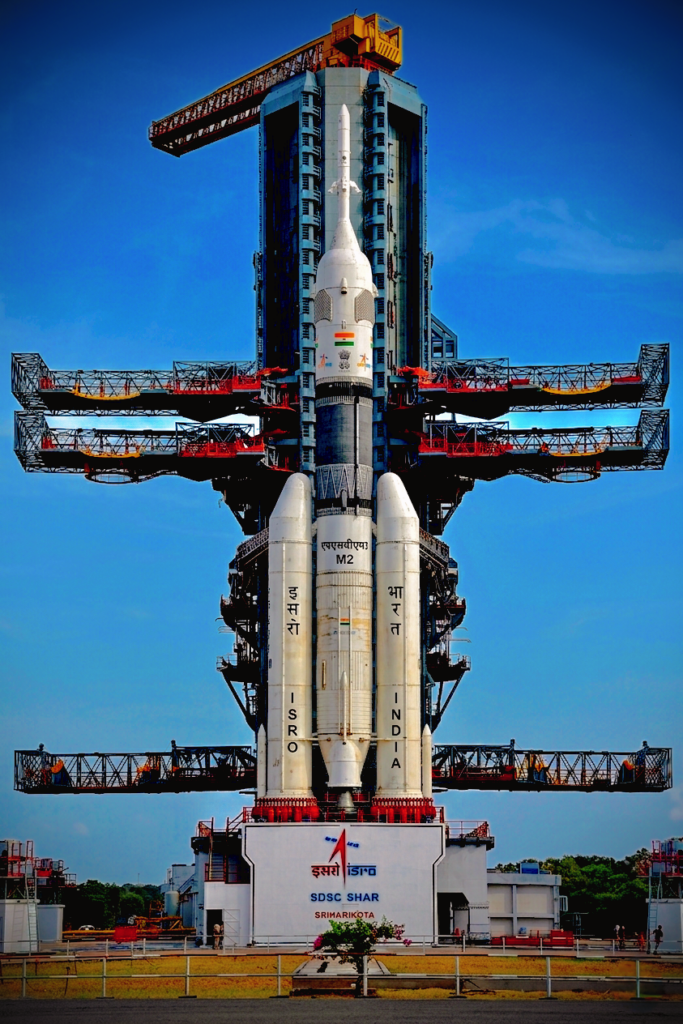
NEW DELHI — The Indian Space Research Organisation said on Thursday it will develop a heavy‑lift launch vehicle about 120 metres tall, roughly 40 storeys, putting it among the world’s tallest rockets. The vehicle, slated for a maiden flight in 2030, is intended to carry crewed lunar missions and deep‑space probes beyond Earth’s orbit.
Project Overview
At 120 metres, the new launch system would exceed the height of ISRO’s current launchers, such as the GSLV‑Mk III, which stands at 58 metres. It would be shorter only than NASA’s Saturn V (111 m) and SpaceX’s Starship (120 m). The agency’s statement described the rocket as a “next‑generation heavy‑lift vehicle” that can lift up to 30 tonnes to low‑Earth orbit, a capacity comparable with the United States’ SLS Block 2.
ISRO officials said the vehicle will serve as the backbone for the nation’s ambitious lunar program, including the planned crewed mission slated for 2032. The rocket will also enable the launch of large interplanetary probes, such as a proposed mission to Europa and a future exoplanet‑exploration platform. By consolidating heavy‑lift capability in a single launcher, the agency hopes to reduce reliance on foreign launch services for high‑mass payloads.
The development timeline outlined a three‑phase approach. Phase 1, running through 2027, will focus on detailed design and subsystem testing. Phase 2, from 2028 to 2029, will see full‑scale structural and propulsion tests at the Satish Dhawan Space Centre. The final phase, beginning in early 2030, will culminate in an integrated flight‑test of the complete vehicle. ISRO has earmarked a dedicated test stand at the Thumba Equatorial Rocket Launching Station for static‑fire trials of the new engines.
Funding for the project is expected to come from the Union budget’s space allocation, which was increased to ₹12,500 crore for the 2026‑27 fiscal year. The agency plans to partner with Indian private firms for engine components, avionics, and composite structures, marking a shift toward a more collaborative industrial model. The Ministry of Defence has also expressed interest in using the heavy‑lift vehicle for satellite deployment in support of national security objectives.
Technical challenges include developing a new cryogenic upper stage capable of operating in the vacuum of space for extended periods, and mastering large‑scale carbon‑fiber composite tanks that can withstand the stresses of launch. ISRO’s in‑house propulsion team is working on a staged combustion engine that could deliver a specific impulse of 460 seconds, matching the performance of contemporary Western engines.
Analysts note that the move places India in direct competition with the United States, China and Russia, all of which are fielding or planning rockets of similar size. The new vehicle could also open commercial opportunities, allowing ISRO to offer heavy‑lift services to satellite operators worldwide. If successful, the launcher would cement India’s status as a major player in the emerging market for deep‑space exploration and large‑scale satellite constellations.
Primary Sources & Official Records
- Among world’s tallest: Isro sets sights on rocket as high as 40 storeys, among world’s tal
- ISRO Sets Sights Beyond Earth: Plans Space Mission To Explore Exo-Planets, Their Potential
- From tea stall to Mount Everest, Meghalaya’s Rifiness Warjri sets sights on 7 summits – Th
- Padakanti Vishwanath Karthikey is the youngest to climb Mt Denali – The Hindu