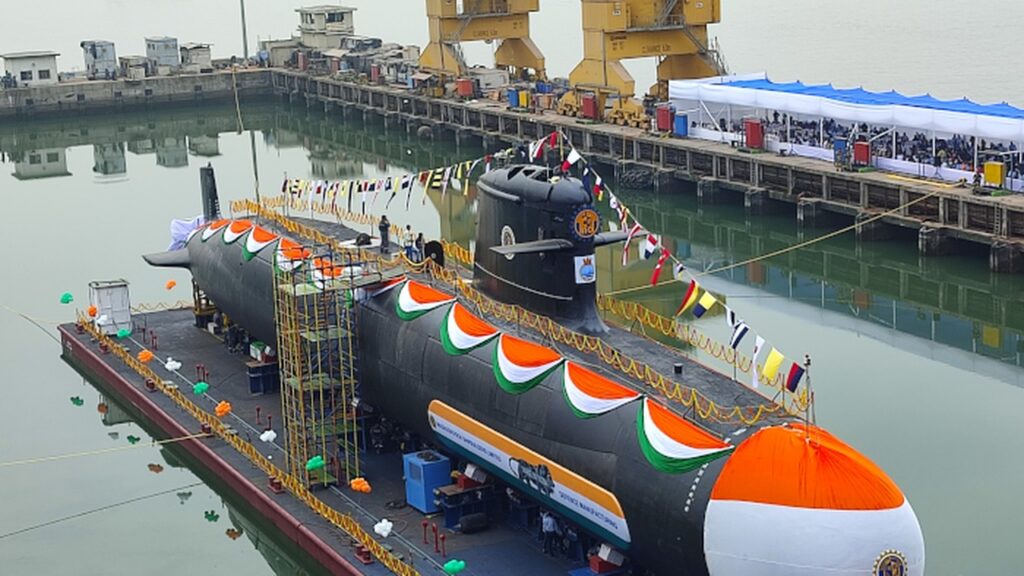
NEW DELHI — Germany is prepared to sign the Project-75(I) submarine contract with India and is currently awaiting the final administrative go-ahead from New Delhi, German envoy Jasper Wieck said on Wednesday.
Wieck, the German High Commissioner to India, made the remarks during a press briefing in New Delhi, confirming that the bilateral defense agreement, valued at approximately $8 billion, is in its final stages of negotiation. The deal involves the construction of six Scorpene-class submarines in India, a project that has been under discussion for several years but has faced delays due to complex procurement procedures and geopolitical considerations.
Finalizing the $8 Billion Deal
The Project-75(I) initiative is a cornerstone of the Indo-German defense partnership, aimed at enhancing India’s indigenous submarine manufacturing capabilities while integrating advanced German naval technology. Wieck stated that the German government has completed its internal approvals and is ready to move forward with the signing ceremony as soon as the Indian Ministry of Defence issues the final purchase order.
“We are ready. The ball is in India’s court,” Wieck said, emphasizing that Berlin views the submarine deal as a strategic priority. He added that the project would not only strengthen India’s naval deterrence but also create significant employment opportunities in the Indian shipbuilding sector, particularly in Visakhapatnam, where the submarines are slated to be constructed.
The contract, if finalized, would be one of the largest defense exports from Germany to India. It includes the transfer of technology for submarine hulls, propulsion systems, and combat management systems, which are critical for India’s goal of achieving self-reliance in naval platforms. The deal is expected to involve a consortium of German and Indian companies, with ThyssenKrupp Marine Systems (TKMS) playing a leading role in the German contingent.
Strategic Context and Economic Impact
India has been actively seeking to diversify its defense procurement sources beyond traditional suppliers like Russia and France. The Project-75(I) deal aligns with the government’s ‘Atmanirbhar Bharat’ (Self-Reliant India) initiative, which aims to boost domestic manufacturing and reduce dependency on foreign imports. The submarine project is expected to inject billions of dollars into the Indian economy over the next decade, with significant spillover effects on the broader defense industrial base.
Analysts note that the finalization of the deal would also strengthen the strategic alignment between India and Germany, particularly in the context of the Indo-Pacific region. Both countries have been increasingly coordinating on maritime security issues, including freedom of navigation and counter-piracy operations. The submarine deal is seen as a tangible outcome of the high-level political dialogue between Prime Minister Narendra Modi and German Chancellor Olaf Scholz, who have met on multiple occasions to discuss defense cooperation.
Procurement Process and Delays
The Project-75(I) contract has been in the pipeline since 2019, when the Indian government initiated the procurement process. However, the deal has faced several hurdles, including disagreements over pricing, technology transfer terms, and the scope of indigenous content. The Indian government has insisted on a high level of local manufacturing, while German companies have raised concerns about the cost implications of meeting these requirements.
In recent months, both sides have engaged in intensive negotiations to resolve these issues. The Indian Ministry of Defence has reportedly made concessions on certain technical specifications to expedite the signing process. Wieck acknowledged that the negotiations have been complex but expressed confidence that the deal would be signed in the near future.
“We are working closely with our Indian counterparts to ensure that the contract meets the requirements of both governments,” Wieck said. “We are optimistic that we will be able to sign the agreement before the end of the year.”
Broader Defense Cooperation
The submarine deal is part of a broader defense cooperation framework between India and Germany, which includes joint exercises, technology sharing, and collaborative research. The two countries have also been exploring cooperation in other areas, including unmanned aerial vehicles, cyber security, and space technology.
India’s defense establishment has been keen to deepen ties with European nations, particularly Germany, which is one of the world’s leading defense exporters. The Project-75(I) deal is expected to pave the way for further defense collaborations, including the potential procurement of advanced fighter jets and naval vessels from Germany.
As the negotiations reach their final stages, attention is now turning to the logistics of the signing ceremony and the subsequent implementation of the contract. The Indian government has set up a dedicated task force to oversee the project, ensuring that it is executed in a timely and efficient manner.