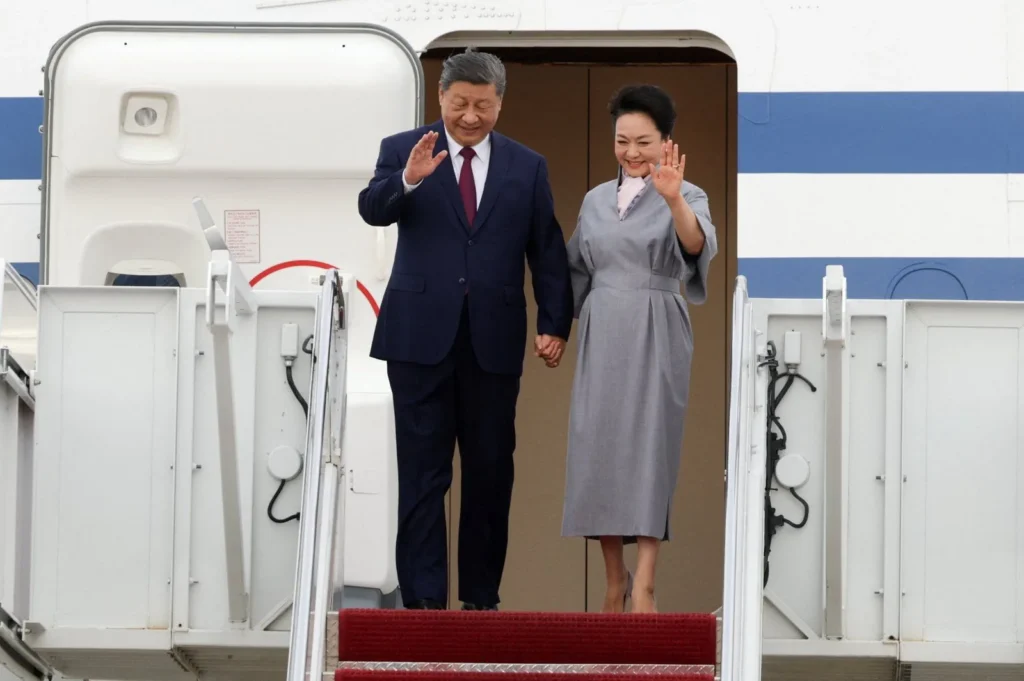
WASHINGTON — Chinese President Xi Jinping arrived in Washington on Wednesday, commencing a state visit that marks a significant moment in U.S.-China relations. In a rare display of diplomatic protocol, U.S. President Donald Trump met Xi on the tarmac at Andrews Air Force Base, greeting the Chinese leader immediately upon his arrival. The planeside welcome, a gesture typically reserved for the most senior foreign dignitaries, underscored the high priority both administrations have placed on stabilizing bilateral ties amid ongoing global economic and geopolitical tensions.
High-stakes diplomatic engagement
The visit is the first state visit by a Chinese leader to the United States in several years, signaling a deliberate effort by both Washington and Beijing to manage competition and foster cooperation in critical areas. According to official schedules released by the White House, the two leaders are expected to hold bilateral talks at the White House later in the day, focusing on trade, technology, climate change, and regional security issues. The agenda reflects a complex mix of areas where the two nations have found common ground and those where deep structural disagreements persist.
Trade remains a central pillar of the discussions. U.S. officials have indicated that the talks will address ongoing tariff disputes and supply chain resilience, particularly in the semiconductor and electric vehicle sectors. Chinese officials have previously emphasized the need for a level playing field and have expressed concerns over U.S. export controls on advanced technology. Analysts note that while a comprehensive trade deal is unlikely to emerge from this visit, both sides are expected to seek mechanisms to prevent further escalation and to establish clearer rules of engagement in the digital economy.
Climate and security on the agenda
Beyond economics, the state visit is expected to tackle climate change, a field where U.S.-China cooperation has been sporadic but potentially impactful. Both nations are the world’s largest emitters of greenhouse gases, and their joint actions are viewed as critical to the success of global climate targets. U.S. climate officials have hinted at discussions on clean energy investment and methane reduction, areas where previous administrations have seen limited but tangible progress. The White House has stated that the goal is to build on past agreements and to identify new areas of collaboration that can yield measurable environmental outcomes.
Security issues, particularly regarding the Indo-Pacific region, are also expected to feature prominently in the talks. The United States and China have differing views on maritime security in the South China Sea and the strategic balance in the region. U.S. officials have reiterated their commitment to a free and open Indo-Pacific, while Chinese officials have emphasized the importance of respecting each other’s core interests and spheres of influence. The visit provides a direct channel for the two leaders to address these tensions and to explore ways to reduce the risk of miscalculation or conflict.
Historical context and diplomatic signals
The state visit carries significant symbolic weight, as it represents a high-level reset in a relationship that has been strained by trade wars, technology restrictions, and geopolitical rivalry. Previous state visits by Chinese leaders to the U.S. have often been followed by periods of increased cooperation, though these gains have sometimes been eroded by subsequent policy shifts. The current administration has signaled a willingness to engage constructively with Beijing, while also maintaining a firm stance on issues of national security and human rights. Chinese officials have similarly expressed a desire for a stable and predictable relationship, emphasizing the importance of dialogue over confrontation.
Observers note that the planeside welcome by President Trump is a notable departure from recent diplomatic norms, where such gestures have been less common. This protocol suggests a high level of personal engagement between the two leaders and a shared interest in projecting a message of stability to global markets and allies. The visit is expected to be closely watched by international partners, particularly in Europe and Asia, who are keen to understand the trajectory of U.S.-China relations and its implications for global trade and security architectures.
As the two leaders prepare for their formal meetings, the focus will be on whether the visit can yield concrete outcomes that go beyond symbolic gestures. Both administrations face domestic pressures to demonstrate strength and protect national interests, which may limit the scope for compromise. However, the decision to hold a state visit itself is a clear indication that both sides recognize the necessity of direct communication and the risks of allowing tensions to fester. The coming days will test the durability of this diplomatic reset and its potential to shape the broader international order.
Primary Sources & Official Records
- China’s Xi arrives to Trump welcome on state visit
- China’s Xi arrives in Washington, kicking off state visit with rare planeside welcome from
- China’s Xi arrives in Washington, kicking off his state visit with rare planeside welcome
- Trump greets Xi Jinping at plane as Chinese leader arrives for state visit – The Guardian