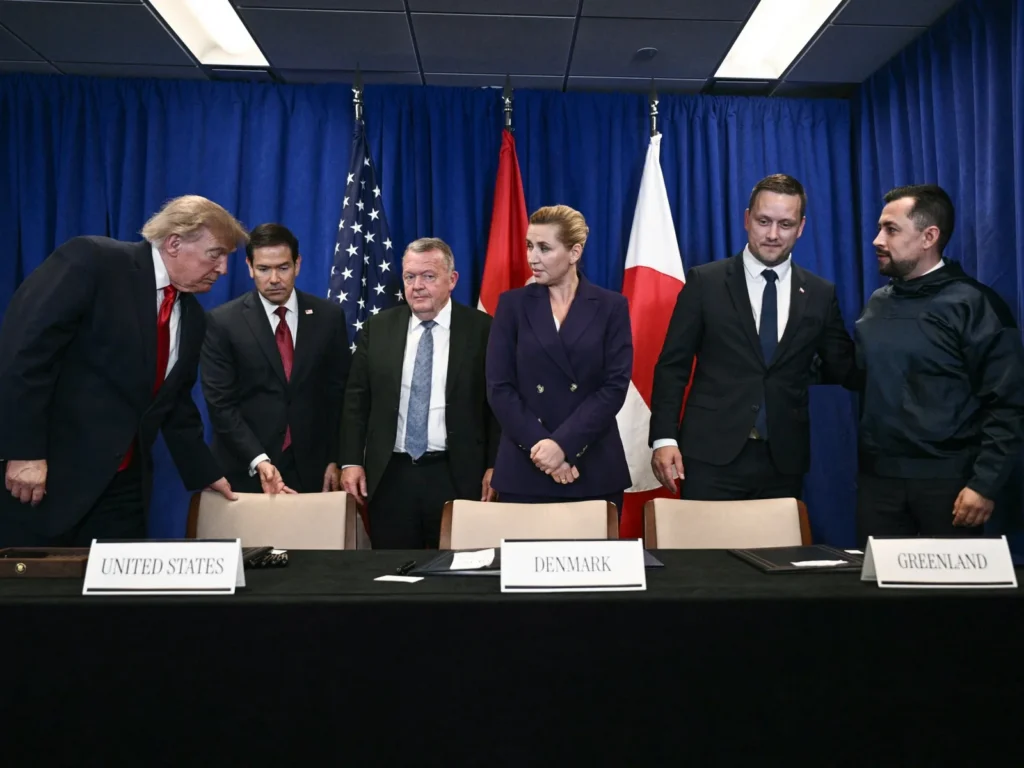
WASHINGTON — The United States and Denmark have finalized a new strategic framework regarding Greenland, marking a significant shift from previous acquisition proposals to a model of enhanced military and economic cooperation. The agreement, announced on 23 September, aims to address American security concerns in the Arctic while respecting Greenland’s status as an autonomous territory within the Kingdom of Denmark.
The deal emerges after months of intense diplomatic negotiations following earlier US statements suggesting a potential purchase of the island. While the new framework does not transfer sovereignty, it grants the United States expanded access to strategic infrastructure, including the Thule Air Base, now known as Pituffik Space Base, and facilitates joint exercises in the region. This approach seeks to mitigate tensions with European allies who had opposed any transfer of control over the territory.
Strategic Importance of the Arctic
Greenland’s strategic value has intensified due to climate change, which is opening new shipping routes and exposing vast reserves of critical minerals. The island sits at the crossroads of the North Atlantic and the Arctic Ocean, making it a key location for monitoring Russian and Chinese activities in the region. The United States views the Arctic as a critical theater for national security, particularly as ice melt allows for increased naval and air operations year-round.
According to the new framework, the US will invest in modernizing infrastructure in Greenland, including ports, airfields, and communication networks. These investments are expected to benefit the local economy while enhancing US military readiness. The agreement also includes provisions for joint scientific research on climate change and environmental protection, areas of mutual interest for both Washington and Copenhagen.
Diplomatic Reactions
Danish Prime Minister Mette Frederiksen stated that the agreement strengthens the transatlantic alliance and ensures that Greenland’s interests are protected. “We have found a way to address US security concerns while upholding the principles of sovereignty and self-determination,” she said in a press conference. The Danish government emphasized that the deal does not alter Greenland’s constitutional status and that any future changes to its political relationship would require the consent of the Greenlandic people.
Greenlandic Prime Minister Mute Egede expressed cautious support for the agreement, noting that it provides economic opportunities without compromising the island’s autonomy. “We are committed to our own path, but we recognize the importance of strong partnerships with our allies,” Egede said. The Greenlandic government has been advocating for greater economic independence and has sought to diversify its economy beyond fishing and mining.
European allies have welcomed the deal as a de-escalation of tensions. French President Emmanuel Macron called the agreement “a constructive step” toward maintaining stability in the Arctic. However, some European officials have expressed concern that the expanded US military presence could further complicate relations with Russia, which has been increasing its own military activities in the region.
Geopolitical Implications
The agreement reflects a broader US strategy to secure its position in the Arctic amid growing competition with Russia and China. Both countries have been investing in icebreakers, military bases, and resource extraction in the region. The US aims to counter these efforts by strengthening its partnerships with Arctic nations, including Canada, Norway, and the Nordic countries.
Analysts note that the deal could serve as a model for other US alliances in contested regions, emphasizing cooperation over confrontation. However, critics argue that the expanded US military presence may provoke a stronger response from Russia, potentially leading to an arms race in the Arctic. The long-term sustainability of the agreement will depend on its ability to balance security interests with economic development and environmental protection.
The new framework is expected to be implemented over the next five years, with regular reviews to assess its effectiveness. The US and Denmark have established a joint committee to oversee the implementation of the agreement and address any emerging issues. The deal marks a new chapter in US-Denmark relations and underscores the growing importance of the Arctic in global geopolitics.