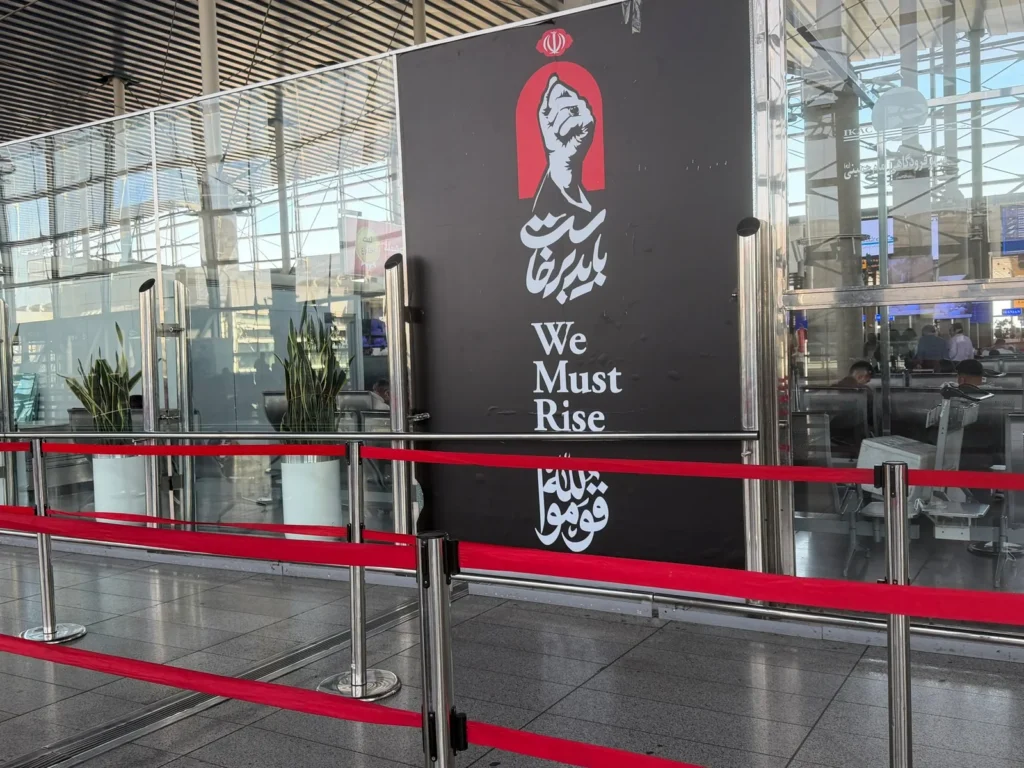
WASHINGTON — The United States has tightened aviation sanctions on Iran, forcing the country’s airlines to cancel flights and prompting thousands of travelers to seek overland routes across the Middle East. The move, announced on Tuesday, follows a series of executive orders that restrict the sale of aircraft parts and maintenance services to Iranian carriers. The sanctions have disrupted scheduled flights to destinations in Europe, the United States and the Gulf, according to reports from Al Jazeera and Yahoo News.
US sanctions tighten restrictions on Iranian airlines
The new sanctions target aircraft leasing, maintenance, and parts. They also prohibit the use of U.S. software and navigation systems in Iranian aircraft. As a result, airlines such as Iran Air and Mahan Air have cancelled flights to London, Paris, New York and several Gulf states. The U.S. Treasury’s Office of Foreign Assets Control (OFAC) issued the restrictions on September 20, citing national security concerns linked to Iran’s nuclear program.
Iran warns neighbors of potential airport disruptions
Iran International reports that the Iranian government has warned neighboring countries that it could disrupt regional airports if its flights are barred. The warning came after the U.S. sanctions were announced, and the Iranian Ministry of Foreign Affairs said it would take measures to protect its aviation interests. The statement was issued on September 22 and was echoed by the Iranian embassy in Washington.
Impact on travelers and regional aviation
Thousands of passengers who had booked flights to Europe and the United States are now forced to travel by road or rail. According to airline officials, more than 15,000 tickets have been cancelled in the past 48 hours. Travelers are rerouting through land corridors that cross Turkey, Iraq and Jordan, adding days to their journeys. Cargo flights have also been affected, with several shipments delayed or rerouted to alternative airports.
International response
The U.S. State Department said the sanctions are part of a broader effort to curb Iran’s nuclear program. European airlines have expressed concern over the impact on connectivity and have called for a review of the sanctions. The International Civil Aviation Organization (ICAO) has not issued a statement on the new restrictions.
Legal and regulatory context
The sanctions are issued under the U.S. sanctions regime that governs Iran’s compliance with the Joint Comprehensive Plan of Action (JCPOA). They are enforced by OFAC and are consistent with the U.N. Security Council resolutions that prohibit the sale of aircraft parts to Iran.
Future outlook
Iranian officials have said they will seek alternative sources for aircraft parts and maintenance. The U.S. government has indicated that the sanctions could be extended or expanded if Iran does not comply with its nuclear obligations. The impact on regional aviation remains uncertain, but airlines are monitoring the situation closely.
Primary Sources & Official Records
- US aviation sanctions disrupt Iran flights, push travellers overland
- US aviation sanctions disrupt Iran flights, push travellers overland – Yahoo
- Iran warns neighbors over flights as US sanctions disrupt airlines – Daily Sabah
- Iran warns it would disrupt regional airports if its flights are barred – Iran Internation