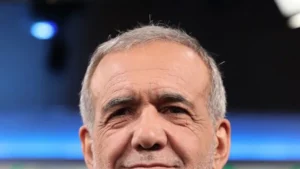
NEW YORK — Iranian President Masoud Pezeshkian presented visual documentation alleging that recent United States military strikes resulted in significant civilian casualties, a claim that intensified diplomatic tensions during his address to the United Nations General Assembly on Wednesday.
The President spoke before the 81st session of the General Assembly, a forum where he sought to shift the narrative surrounding the ongoing regional conflict. Pezeshkian displayed images and video footage on the main assembly hall screens, which he described as “receipts” proving that US forces had targeted residential areas and civilian infrastructure rather than exclusively military objectives.
“These are not just pictures; they are the faces of our people,” Pezeshkian stated, according to transcripts released by the Iranian state media. “The United States claims to uphold international law, yet its actions demonstrate a disregard for the sanctity of civilian life.”
The United States Department of State did not immediately respond to requests for comment regarding the specific allegations. However, in a statement issued earlier in the week, US officials maintained that all military operations were conducted in strict accordance with international humanitarian law and were directed at legitimate military targets associated with groups threatening regional stability.
Independent verification of the specific incidents cited by Pezeshkian remains pending. The United Nations Office for the Coordination of Humanitarian Affairs (OCHA) has noted that access to certain affected areas remains restricted, complicating efforts to independently confirm casualty figures and the precise nature of the strikes. Previous reports from the UN Human Rights Council have highlighted concerns over the proportionality of force used in the region, though specific attributions to US actions in the most recent phase of the conflict have been the subject of intense debate among member states.
The address came at a critical juncture in the diplomatic standoff. Pezeshkian’s speech was part of a broader effort by Tehran to garner international support and isolate Washington diplomatically. The President emphasized that Iran’s response to the strikes had been measured and defensive, contrasting it with what he termed “aggressive unilateralism” by the US.
Delegates from various nations reacted with mixed responses. Representatives from the Non-Aligned Movement expressed concern over the escalation of violence and called for an immediate ceasefire. Conversely, several Western diplomats noted that the presentation of unverified media clips in a formal UN setting did not meet the evidentiary standards required for formal legal proceedings, though they acknowledged the humanitarian gravity of the situation.
The incident underscores the growing use of digital evidence in international diplomacy. While social media and state-run channels have become primary sources for conflict reporting, the lack of independent verification often leads to competing narratives. The UN Secretary-General’s office reiterated its commitment to impartial fact-finding and urged all parties to facilitate access for international observers to assess the impact of military operations on civilian populations.
Analysts noted that Pezeshkian’s strategy reflects a shift in Iran’s diplomatic posture, moving from defensive denials to proactive accusation. By bringing specific “receipts” to the General Assembly, the President aimed to frame the US actions as a violation of the Geneva Conventions, potentially laying the groundwork for future legal challenges at the International Court of Justice or the International Criminal Court.
The General Assembly session continued with speeches from other heads of state, many of whom called for de-escalation and a return to diplomatic channels. The outcome of these diplomatic efforts remains uncertain, with both Tehran and Washington maintaining firm stances on their respective positions. The international community is closely monitoring the situation, with fears that further escalation could have broader implications for global energy markets and regional security.