NEW DELHI — India’s defence ministry released a fact sheet on 27 September 2026 that charts the country’s progress toward self‑reliance in military production and underscores a deepening partnership with the United States. The document, issued by the Press Information Bureau, lists a series of domestic programmes that have expanded the nation’s defence manufacturing base over the past decade.
Indigenous Production Gains Momentum
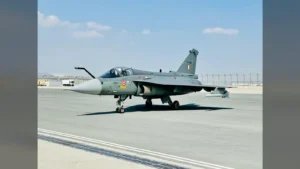
The fact sheet notes that India has increased its domestic defence output through initiatives such as the ‘Make in India’ defence programme and the Defence Procurement Procedure (DPP) reforms. It highlights key projects, including the indigenous production of the Light Combat Aircraft (LCA) Tejas, the Akash surface‑to‑air missile, and the Arjun main battle tank. The ministry also points to the establishment of the Defence Innovation and Development Agency (DIDA) to accelerate research and development in critical technologies.
According to the document, the Indian Armed Forces have begun to field several domestically produced platforms that were previously imported. The LCA Tejas, for instance, entered operational service with the Indian Air Force in 2024, and the latest batch of 30 aircraft was delivered in early 2026. The Akash missile system has been integrated into the Indian Army’s air defence regiments, while the Arjun tank has seen upgrades in fire‑control and armour protection.
Strategic Autonomy and Economic Impact
The fact sheet emphasizes that self‑reliance in defence is a cornerstone of India’s national security strategy. It cites the Defence Acquisition Policy, which aims to reduce dependence on foreign suppliers for critical components. The ministry states that domestic production has created over 50,000 jobs in the defence sector and has stimulated ancillary industries such as electronics, composites, and precision engineering.
Prime Minister Narendra Modi’s 2024 National Defence Policy is referenced as a guiding framework for the country’s defence industrial base. The policy calls for a 30% increase in defence production by 2030 and a 20% increase in domestic procurement of weapons systems. The fact sheet indicates that India has already achieved a 12% rise in domestic procurement in the fiscal year 2025‑26, a step toward the policy’s long‑term targets.
India‑US Defence Partnership Grows
In a separate report, the United States ambassador to India, Sergio Gor, highlighted the growing strength of the India‑US defence partnership during the annual Yudh Abhyas exercise. The exercise, which began in 2019, brought together more than 20,000 troops from both countries and tested joint operational capabilities in a range of scenarios.
Ambassador Gor said that Yudh Abhyas “reflects the deepening collaboration between the two nations in areas such as joint training, technology transfer, and interoperability.” He added that the exercise would continue to serve as a platform for sharing best practices and strengthening mutual trust.
Defence officials in New Delhi noted that the partnership has led to increased access to advanced technology, including the procurement of the F‑35 Joint Strike Fighter and the development of joint projects such as the Integrated Guided Missile Development Programme (IGMDP). The ministry also pointed out that the United States has provided training and logistical support for Indian forces during recent exercises.
Future Outlook and Challenges
While the fact sheet celebrates progress, it also acknowledges challenges that remain in achieving full self‑reliance. The ministry cites the need for further investment in research and development, the expansion of the domestic supply chain, and the improvement of quality standards to meet international benchmarks.
Industry analysts say that India’s defence manufacturing ecosystem is still dependent on imported components for certain high‑technology systems. The ministry is working with private sector partners to bridge these gaps, and it has announced a new incentive package for firms that invest in advanced manufacturing technologies.
In the broader geopolitical context, India’s defence self‑reliance is seen as a counterbalance to regional security dynamics, particularly in the Indo‑Pacific region. The fact sheet states that a robust domestic defence industry enhances India’s ability to respond to emerging threats and maintain strategic autonomy.