WASHINGTON — The competition between the United States and China for dominance in artificial intelligence has entered a critical phase, with the United States retaining a decisive advantage in hardware infrastructure and capital investment, while China narrows the gap in model development and open-source adoption, according to a comprehensive analysis published by Al Jazeera on 24 September 2026.
The report, titled “China vs US: Who is winning the AI race, in four charts,” synthesizes recent data points to illustrate the diverging strategies of the two superpowers. The analysis indicates that while the U.S. continues to lead in the production of high-end graphics processing units (GPUs) and the volume of private capital deployed into AI startups, China is leveraging state-backed initiatives to scale the deployment of large language models (LLMs) and integrate AI into industrial applications.
Compute and Capital Disparities
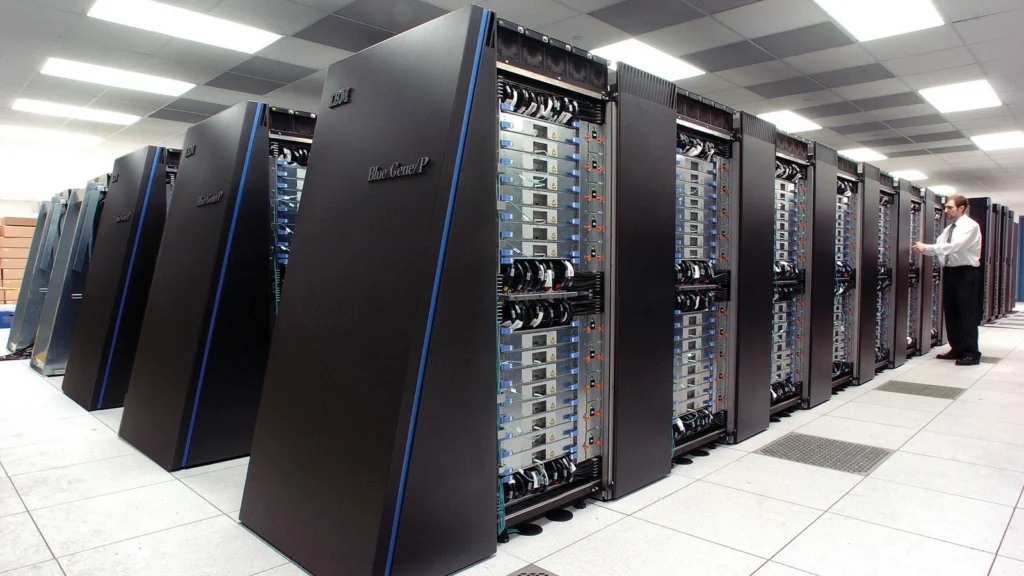
The first dimension of the race, as detailed in the Al Jazeera report, focuses on compute resources. The United States maintains a significant lead in the availability of advanced semiconductors, a sector where export controls have restricted China’s access to the most powerful chips. Despite these restrictions, the report notes that Chinese firms have developed alternative architectures and optimized software stacks to maximize the efficiency of available hardware. This has resulted in a persistent but narrowing gap in raw computational power per dollar spent.
Capital investment remains a key differentiator. U.S. venture capital firms have poured billions of dollars into AI startups, particularly those focused on generative AI and autonomous systems. In contrast, China’s investment landscape is characterized by a mix of private venture capital and substantial state-directed funding. The Al Jazeera analysis suggests that while U.S. private investment is higher in absolute terms, the Chinese government’s strategic allocation of resources to specific AI sectors has allowed for rapid scaling in areas such as computer vision and natural language processing.
Model Development and Open Source
The second and third charts in the report examine the landscape of AI model development. The United States is home to several of the world’s most advanced proprietary models, which are widely used in enterprise and consumer applications. However, the report highlights China’s growing influence in the open-source AI ecosystem. Chinese developers have released a series of open-source models that have gained significant traction globally, particularly in regions where cost and accessibility are primary concerns.
This open-source strategy has allowed Chinese AI firms to build a large developer community and establish standards for AI deployment. The Al Jazeera report notes that while U.S. models often lead in benchmark performance, Chinese models are increasingly competitive, particularly in multilingual capabilities and efficiency. This has forced U.S. companies to accelerate their own open-source initiatives to maintain their competitive edge.
Industrial Integration and Policy
The final chart in the analysis focuses on the integration of AI into industrial and economic sectors. The United States is leveraging AI to enhance productivity in sectors such as healthcare, finance, and manufacturing. China, on the other hand, is prioritizing the integration of AI into its manufacturing base, aiming to create a “smart manufacturing” ecosystem. The report indicates that China’s approach is more centralized, with the government playing a direct role in setting AI standards and promoting adoption in key industries.
The Al Jazeera analysis concludes that the AI race is not a zero-sum game, but a complex competition with multiple fronts. The United States leads in hardware and capital, while China is making significant strides in model development and industrial application. The report suggests that the outcome of this competition will depend on how effectively each country can overcome its respective challenges: the U.S. must address concerns about the concentration of power in a few large tech firms, while China must navigate the constraints of export controls and the need for greater innovation in foundational research.
The publication of this analysis comes at a time of heightened geopolitical tension between the two nations. The AI race is seen as a key determinant of future economic and military power, and both countries are investing heavily to secure a leading position. The Al Jazeera report provides a data-driven perspective on this competition, highlighting the strengths and weaknesses of each side and offering insights into the likely trajectory of the AI race in the coming years.