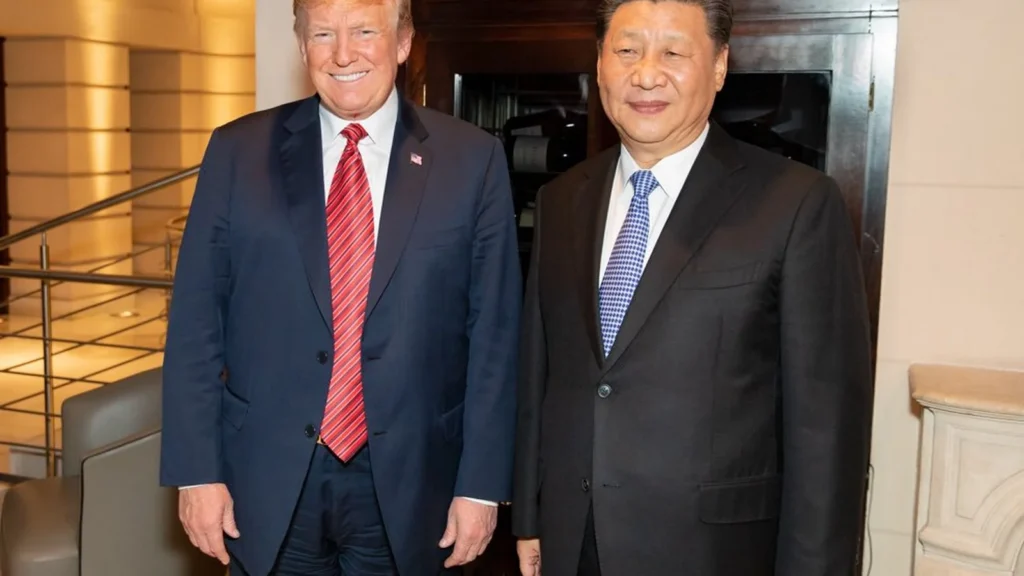
WASHINGTON — President Donald Trump and Chinese President Xi Jinping engaged in direct face-to-face discussions on Wednesday, marking a significant diplomatic encounter centered on the escalating competition for dominance in artificial intelligence. The meeting, which took place against a backdrop of intensifying technological rivalry, highlighted the critical role AI plays in the broader strategic balance between the world’s two largest economies.
According to reports from accredited wire services, the summit addressed the rapid advancement of AI capabilities in both nations, with both leaders acknowledging the sector’s potential to reshape global industries and national security landscapes. The discussions were characterized by a focus on managing tensions while exploring areas of potential cooperation, particularly in ensuring the safe and responsible development of autonomous systems.
AI at the Center of Strategic Competition
The artificial intelligence sector has emerged as a primary flashpoint in US-China relations. Both countries have invested heavily in research, infrastructure, and talent acquisition to maintain a competitive edge. The US has leveraged its strengths in semiconductor design and foundational model development, while China has focused on scaling applications, data availability, and state-backed industrial policies. The face-to-face meeting provided a platform for both sides to articulate their positions on export controls, technology transfer, and the ethical frameworks governing AI deployment.
Officials from both delegations emphasized the need for dialogue to prevent a technological decoupling that could destabilize global supply chains. The conversations reportedly touched upon the implications of AI-driven automation for labor markets and the necessity of international standards to mitigate risks associated with advanced machine learning models. While specific agreements were not immediately announced, the engagement itself was viewed as a step toward maintaining open channels of communication in a sector where mistrust has historically hindered collaboration.
Geopolitical and Economic Implications
The economic ramifications of the AI competition are substantial. Both nations are seeking to capture the value generated by AI innovations, which are expected to drive significant growth in sectors ranging from healthcare to finance. The discussions likely included references to trade policies that affect the flow of AI-related goods and services, including high-performance chips and cloud computing resources. The outcome of these talks may influence future regulatory frameworks and international trade agreements, potentially shaping the global AI landscape for years to come.
Path Forward
While the immediate outcomes of the meeting remain under review, the face-to-face interaction sets a precedent for ongoing dialogue on critical technology issues. Both leaders have indicated a commitment to further engagement, with follow-up discussions expected to address specific technical and regulatory challenges. The global community is watching closely, as the US-China dynamic in AI will have far-reaching implications for innovation, security, and economic stability worldwide. The emphasis on direct communication highlights the importance of diplomatic channels in navigating the complexities of the modern technological age.