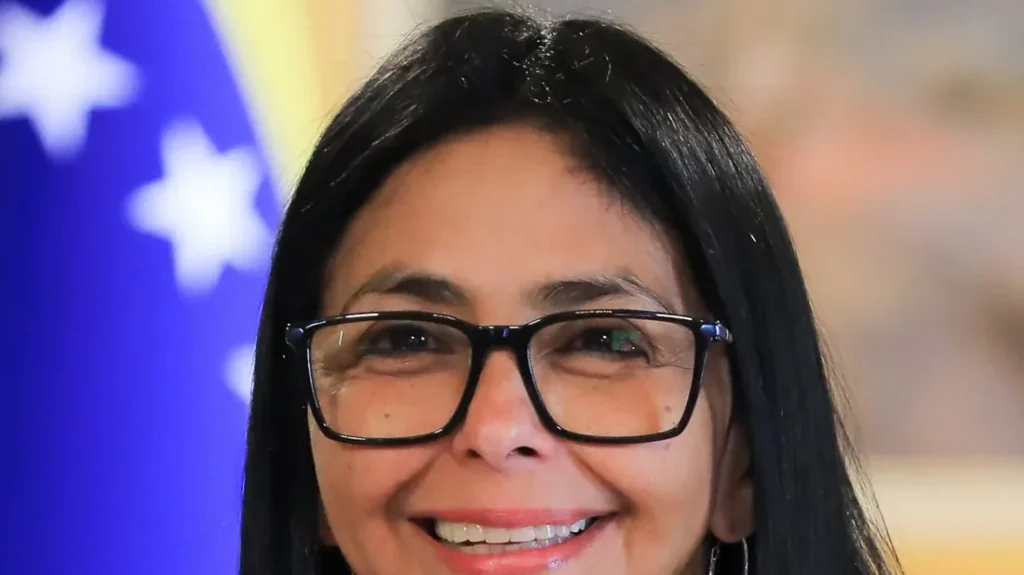
NEW YORK — Venezuela’s acting leader, Delcy Rodriguez, addressed the United Nations General Assembly on Wednesday, pledging to hold presidential elections at the “right moment” but refusing to provide a specific date or timeline for the vote.
The address marked Rodriguez’s first appearance before the UN body since assuming the role of acting president following the political crisis in Venezuela. Her speech drew immediate scrutiny from international observers and opposition figures who have long demanded a clear schedule for democratic restoration in the South American nation.
During her remarks, Rodriguez emphasized the need for stability and national unity before proceeding with electoral processes. She stated that the timing of the elections would be determined by the country’s internal conditions and the necessity to ensure a peaceful and orderly transition. “We will hold elections when the conditions are ripe, at the right moment,” Rodriguez said, without elaborating on what specific criteria would define that moment.
The lack of a concrete timeline has been a central point of contention for the Venezuelan opposition, which has been in exile and has called for immediate elections to legitimize the government. Opposition leaders have repeatedly criticized the current administration for delaying democratic processes and maintaining control over state institutions, including the electoral council and the judiciary.
International reactions to the speech have been mixed. Several Western nations, including the United States and members of the European Union, have previously recognized the opposition leader as the legitimate representative of the Venezuelan people, citing irregularities in previous electoral processes. These governments have called for a transparent and inclusive electoral framework that meets international standards.
Conversely, allies of the Venezuelan government, including Russia and China, have expressed support for Rodriguez’s leadership and emphasized the importance of respecting national sovereignty in determining the timing of domestic political processes. These nations have generally opposed external interference in Venezuela’s internal affairs.
The UN General Assembly session provided a high-profile platform for Rodriguez to articulate the government’s position on the path forward. Her address was part of a broader diplomatic effort to engage with the international community and seek recognition of the current administration’s legitimacy. However, the absence of a specific election date has left many questions unanswered regarding the timeline for political resolution in Venezuela.
Analysts note that the decision to remain vague on timing may be a strategic move to maintain leverage in ongoing negotiations with both domestic and international stakeholders. By not committing to a specific date, the government retains flexibility to adjust its approach based on evolving political and economic conditions.
The economic situation in Venezuela continues to be a significant factor in the political landscape. The country has faced severe economic challenges, including hyperinflation, shortages of basic goods, and a large-scale emigration of its population. These issues have exacerbated public discontent and increased pressure on the government to deliver tangible improvements in living standards.
Rodriguez’s speech also touched on the need for international cooperation to address these economic challenges. She called for the lifting of sanctions that she described as harmful to the Venezuelan people, arguing that these measures have hindered the country’s ability to recover economically. The international community remains divided on the issue of sanctions, with some nations advocating for their removal as a means to encourage political reform, while others maintain that they are necessary to pressure the government into holding credible elections.
The diplomatic implications of Rodriguez’s address extend beyond Venezuela’s borders. The situation in Venezuela has become a focal point for broader geopolitical dynamics in the Western Hemisphere, with various regional and global powers seeking to influence the outcome. The lack of a clear electoral timeline complicates efforts to broker a diplomatic solution and prolongs the uncertainty surrounding the country’s political future.
As the UN General Assembly continues its sessions, further discussions on the Venezuelan crisis are expected. Diplomatic channels remain active, with mediators from various countries attempting to facilitate dialogue between the government and the opposition. However, the absence of a concrete commitment to elections from Rodriguez’s administration poses a significant obstacle to these efforts.
The coming weeks will be critical in determining whether the rhetoric of the UN address translates into actionable steps toward political resolution. International observers will closely monitor any developments in Venezuela’s domestic politics, as well as the reactions of key global players to the government’s stance on elections.
Primary Sources & Official Records
- Venezuela’s Delcy Rodriguez promises elections at UN, gives no date
- Venezuela’s acting leader, at UN for first address, promises elections at the ‘right momen
- Venezuela’s acting leader, at UN for first address, promises elections at the ‘right momen
- Venezuela’s acting leader, at UN for first address, promises elections at the ‘right momen