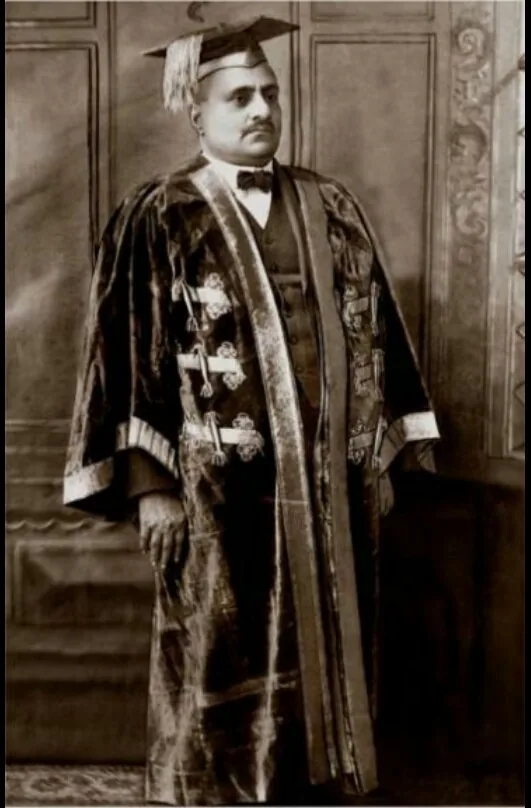
SRI NAGAR — The Jammu and Kashmir administration declared a public holiday on September 23, 2026, to mark the 131st birth anniversary of Maharaja Hari Singh, the last Dogra ruler of the princely state. The decision, issued by the state government, aligns with the annual observance of the date as a commemorative day in the region, coinciding with the political calendar of the Bharatiya Janata Party (BJP), which held special functions across the union territory to honor the monarch.
The holiday order was communicated to government offices and public institutions, ensuring a day of rest for civil servants and administrative staff. In Srinagar and Jammu, BJP leaders organized prayer sessions, cultural programs, and tribute ceremonies at sites associated with the Dogra dynasty. The party’s state unit emphasized the historical significance of Maharaja Hari Singh’s role in the integration of Jammu and Kashmir into the Indian Union in 1947, framing the observance as a recognition of constitutional history and regional unity.
Political Reaction and Legislative Debate
The observance has reignited a recurring political debate in the region regarding the balance of historical commemorations. While the BJP and its allies view the holiday as a legitimate recognition of a key figure in the state’s modern history, opposition parties and certain local legislators have raised objections. A Member of Legislative Assembly (MLA) from the National Conference (NC) party recently sought the restoration of holidays associated with Sheikh Abdullah, the former Prime Minister of Jammu and Kashmir, or the withdrawal of the Hari Singh holiday, arguing that the current arrangement creates an imbalance in the commemorative calendar.
The NC MLA’s demand highlights the ongoing sensitivity surrounding historical figures in Jammu and Kashmir’s political discourse. Sheikh Abdullah, a central figure in the region’s pre-1947 political movement, is celebrated by many in the valley, while Maharaja Hari Singh is revered by others for his decision to accede to India. The administration’s decision to maintain the Hari Singh holiday, despite the political pushback, underscores the government’s stance on preserving the existing commemorative framework.
Historical Context and Administrative Protocol
Maharaja Hari Singh, born on September 23, 1895, ruled the princely state of Jammu and Kashmir from 1925 until the state’s integration into India in 1947. His decision to sign the Instrument of Accession on October 26, 1947, is a pivotal moment in Indian constitutional history, leading to the state’s inclusion in the Indian Union. The BJP’s commemorative functions this year included speeches by senior party leaders who highlighted this historical decision as a foundation for the region’s development and security.
The administration’s holiday order follows standard protocol for significant historical anniversaries in the state. Public sector units, educational institutions, and government departments were instructed to observe the day, with many organizations organizing internal tributes. The event was marked by a relatively low-key public presence compared to previous years, with security forces maintaining a standard deployment to ensure the smooth conduct of the functions.
Broader Implications for State Politics
The controversy over the holiday reflects the broader political dynamics in Jammu and Kashmir, where historical narratives often intersect with contemporary political alliances. The BJP, which has been the dominant political force in the region since 2018, has consistently supported the observance of Hari Singh’s birthday as a means to reinforce its narrative of national integration. Conversely, opposition parties have used the issue to critique the government’s approach to historical memory and regional identity.
Analysts note that the administration’s decision to maintain the holiday is likely to remain a point of contention in the upcoming legislative sessions. The debate is expected to continue as political parties prepare for future electoral cycles, with each side leveraging historical figures to appeal to different segments of the electorate. The government has not indicated any plans to alter the holiday schedule, suggesting that the current arrangement will persist in the near term.