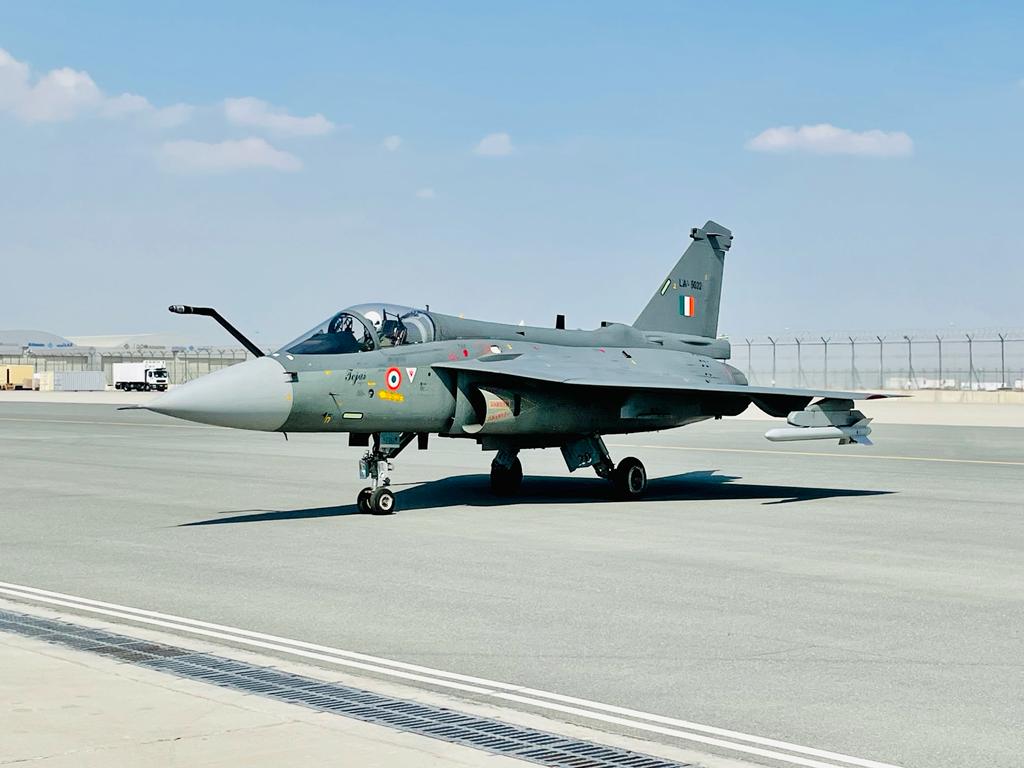
NEW DELHI — The Japan Air Self-Defense Force (JASDF) deployed F-2 multirole fighters to India for the first time in 2026, marking a significant expansion of bilateral air defense cooperation during the joint exercise Veer Guardian 2026. The deployment coincided with a high-profile demonstration by the Indian Air Force (IAF) Chief of the Staff, Air Chief Marshal, who flew an indigenous Tejas light combat aircraft during the event’s concluding phase.
The exercise, conducted in coordination between the IAF and the JASDF, focused on joint air defense operations, interoperability, and tactical coordination. According to the Press Information Bureau (PIB), the exercise concluded with a series of joint sorties and technical discussions aimed at enhancing mutual operational understanding. The participation of Japanese F-2 fighters represents a notable shift in the scope of India-Japan military engagement, moving beyond previous observer or limited participation roles to active operational deployment on Indian soil.
The F-2 is a multirole fighter developed by Mitsubishi Heavy Industries, based on the Northrop F-20 prototype. It is designed for air superiority and ground attack missions. The deployment to India for Exercise Veer Guardian 2026 was confirmed by official Indian government sources, with the PIB issuing a press release detailing the conclusion of the exercise. The release noted that the exercise involved joint training in air defense, surveillance, and response protocols, reflecting the deepening strategic partnership between New Delhi and Tokyo.
In a separate but related development during the exercise period, the IAF Chief of the Staff conducted a flight in a Tejas fighter, a domestically developed single-engine light combat aircraft. The Tejas, developed by the Hindustan Aeronautics Limited (HAL), has been a cornerstone of India’s indigenous defense manufacturing efforts. The Chief’s flight was part of the ceremonial and operational demonstrations associated with the exercise’s conclusion, highlighting the IAF’s commitment to its indigenous fleet alongside international partnerships.
Exercise Veer Guardian 2026 was part of a broader series of bilateral and multilateral military exercises between India and Japan. The two countries have been strengthening their defense ties in recent years, with increased joint patrols, naval exercises, and defense technology collaborations. The deployment of F-2 fighters to India underscores the growing operational integration between the two air forces. Analysts have noted that such deployments facilitate the exchange of tactical knowledge and improve coordination in potential joint operations, particularly in the context of regional security dynamics in the Indo-Pacific.
The PIB press release, identified by PRID 2313413, stated that the exercise concluded successfully with the participation of personnel from both air forces. It highlighted the importance of the exercise in building trust and operational readiness. The release did not provide specific details on the number of F-2 fighters deployed or the exact duration of their stay, but confirmed their active participation in joint sorties. The IAF and JASDF have previously conducted joint exercises, but the physical deployment of Japanese fighter jets to Indian bases was a new development in 2026.
India and Japan have been partners in the Quad security dialogue, which also includes the United States and Australia. The defense cooperation between New Delhi and Tokyo has expanded to include joint development of defense technologies, such as the joint development of a stealth fighter and a multirole transport aircraft. The deployment of F-2 fighters to India is seen as a practical step in this broader strategic alignment. The exercise also provided an opportunity for the two air forces to test communication systems, data links, and joint command structures.
The IAF Chief’s flight in the Tejas fighter was widely reported in Indian media, emphasizing the aircraft’s role in the IAF’s modernization program. The Tejas has undergone several upgrades, including the integration of advanced avionics and weapons systems. The Chief’s participation in the flight was viewed as a symbol of the IAF’s confidence in its indigenous capabilities. The event was attended by senior military officials from both countries, who exchanged views on future defense cooperation and regional security challenges.
The conclusion of Exercise Veer Guardian 2026 was marked by a joint ceremony, where representatives from the IAF and JASDF signed a memorandum of understanding on future joint training and exercises. The MoU outlined plans for regular bilateral exercises and the exchange of personnel for training purposes. The deployment of F-2 fighters to India is expected to continue in future iterations of the exercise, further solidifying the air defense partnership between the two nations.
Primary Sources & Official Records
- Japan Deploys F-2 Fighters to India: Air Force Chief Flies Indian Tejas Fighter
- Historic First: Japanese F-2 fighters deploy to India for Exercise Veer Guardian – Aerospa
- US Air Force to Deploy Six F-35 Stealth Fighters in India for Multinational Tarang Shakti
- IAF’S JOINT AIR DEFENCE EXERCISE WITH JAPAN ‘EXERCISE VEER GUARDIAN 2026′ CONCLUDES – PIB