NEW DELHI — In a bid to streamline welfare distribution, the government has made biometric authentication under Aadhaar compulsory for all subsidy schemes, a move that could either bridge or widen the digital divide for the country’s aging population. The same policy shift coincides with a surge in UPI transactions, which now account for more than 70% of all digital payments in India.
Biometric Mandate for Subsidies
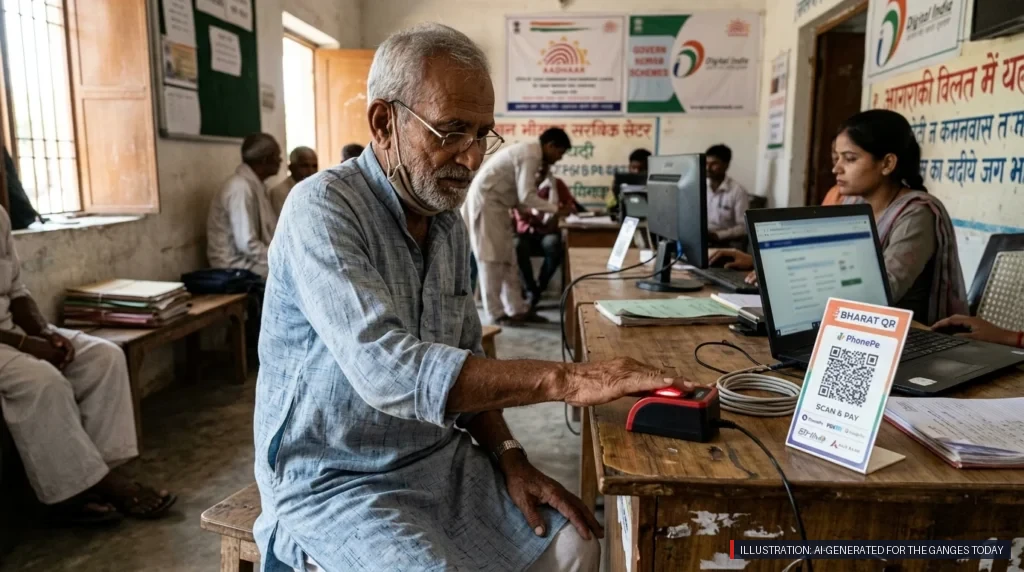
The Ministry of Electronics and Information Technology announced a rule that requires beneficiaries to use Aadhaar biometrics to claim subsidies such as the Pradhan Mantri Jan Dhan Yojana, the National Food Security Mission and various state‑level pension schemes. The rule, published in the Biometric Update on 1 September 2026, states that biometric verification will replace manual signatures and paper receipts for all subsidy disbursements. The move is intended to reduce fraud and ensure that benefits reach the intended recipients.
While the policy promises greater transparency, it also raises concerns for older adults who may lack the physical or technical ability to provide biometric data. According to the report, a significant proportion of senior citizens in rural districts still rely on paper‑based documentation for pension payments and cannot easily navigate the new digital interface.
UPI’s Rapid Adoption
Unified Payments Interface (UPI) has become the backbone of India’s digital economy, with more than 1.5 billion transactions recorded in the last fiscal year. The platform’s simplicity—linking bank accounts to a mobile number—has attracted users across age groups. However, the same simplicity is not always accessible to older adults who may struggle with smartphones or lack digital literacy.
In 2025, the Reserve Bank of India launched a “Senior Citizen UPI” pilot in select districts, offering a dedicated helpline and simplified app interface. Early reports suggest that the pilot has increased UPI usage among people aged 60 and above by 12% in the first six months, but the uptake remains below the national average.
Challenges of Digital Inclusion
Older adults face multiple barriers: limited access to smartphones, low digital literacy, and concerns over privacy and fraud. The Aadhaar biometrics rule, while aimed at reducing counterfeit claims, may inadvertently exclude those who cannot provide biometric data due to health issues or lack of awareness.
Experts argue that inclusive design must go beyond policy mandates. “Digital platforms need to be built with the elderly in mind, offering voice‑based interfaces and community training,” said a senior analyst at the National Institute of Technology. The analyst also highlighted that government schemes should provide alternative verification methods for those unable to use biometrics.
Government Response
In a statement released by the Ministry of Electronics and Information Technology, officials said that the biometric rule would be implemented in phases, with a grace period for beneficiaries to adapt. The ministry also announced a partnership with state governments to set up biometric kiosks in community centres, aiming to reach 80% of rural households by 2028.
Meanwhile, the Ministry of Finance has pledged to expand UPI’s reach by subsidising mobile devices for senior citizens and launching a “Digital Literacy for Seniors” program in collaboration with non‑governmental organisations.
Looking Ahead
As India pushes towards a cash‑less economy, the success of digital rails will depend on how well they accommodate the needs of its aging population. The Aadhaar biometrics rule and UPI’s expansion represent significant steps, but they must be paired with robust support systems to ensure that older adults are not left behind.