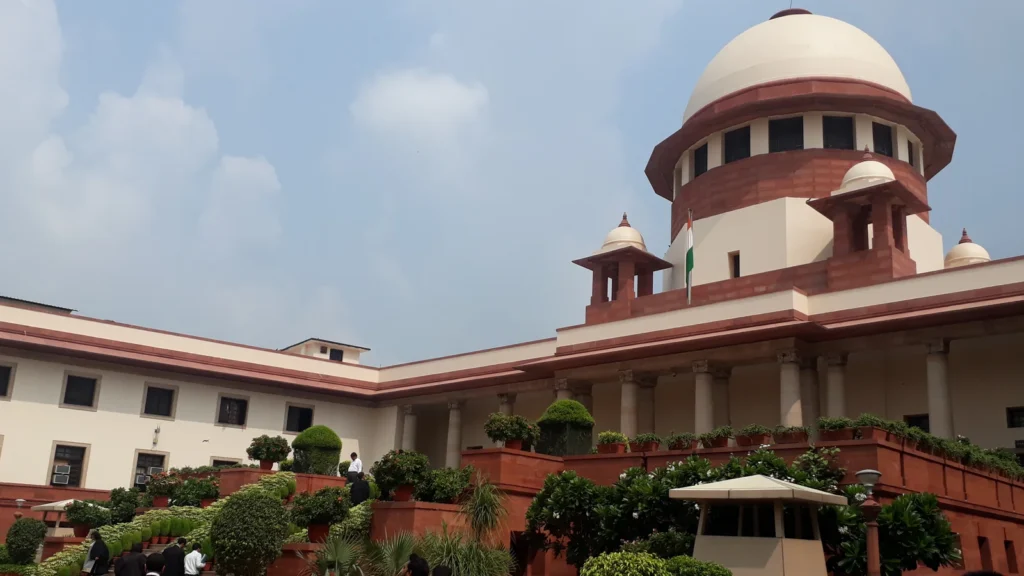
NEW DELHI — The Supreme Court on Tuesday refused to entertain a public interest litigation (PIL) seeking the enactment of a central law and the formulation of uniform guidelines to curb ragging and bullying in schools across India. The bench, comprising Justices B.V. Nagarathna and Manoj Misra, dismissed the petition, stating that the matter did not warrant the court’s intervention at this stage and that existing regulatory frameworks and institutional mechanisms were sufficient to address the issue.
Legal Basis for Rejection
The petition, filed by a private citizen, argued that the absence of a dedicated central legislation specifically targeting ragging in schools had led to inconsistent enforcement of anti-bullying measures across different states and educational boards. The petitioner contended that while the Supreme Court had previously issued guidelines in 2007 to curb ragging in higher education institutions, no similar comprehensive statutory framework existed for primary and secondary schools. The petitioner sought a direction to the Union government to frame a central law and to the Central Board of Secondary Education (CBSE) and other state boards to issue mandatory guidelines for the prevention and punishment of ragging.
In its order, the bench noted that the issue of ragging and bullying in schools is a matter of public concern, but it did not meet the threshold for the court to issue a directive for the enactment of a new law. The court observed that the Union government and state governments have the primary responsibility to formulate policies and regulations to ensure the safety and well-being of students in educational institutions. The bench further noted that the existing guidelines issued by the Supreme Court in 2007, though primarily aimed at higher education, have been adopted by many schools and educational institutions as a reference point for addressing ragging.
Context of Existing Regulations
The Supreme Court’s 2007 guidelines, issued in the case of *Pravesh Kumar v. Union of India*, mandated that educational institutions establish anti-ragging committees and impose penalties on students found guilty of ragging. These guidelines have been widely implemented in universities and colleges, but their application in schools has been less uniform. The CBSE and other state education boards have issued their own guidelines and circulars to address bullying and ragging in schools, but critics have argued that these measures are often inadequate and lack the force of law.
The rejection of the PIL comes at a time when there has been growing concern over incidents of bullying and ragging in schools, particularly in the wake of several high-profile cases that have drawn national attention. Parents, educators, and student welfare organizations have called for stronger legal protections for students and more effective enforcement of existing guidelines. The Supreme Court’s decision is likely to be viewed by these groups as a setback, as it leaves the responsibility for addressing the issue to the executive and legislative branches of government.
Implications for Educational Policy
The court’s decision does not preclude the Union government or state governments from taking legislative action to address ragging in schools. The matter remains open for policy formulation and legislative debate. The Supreme Court’s order, however, underscores the principle that the judiciary should not substitute its own policy preferences for those of the elected representatives. The bench emphasized that the court’s role is to interpret and apply the law, not to create new laws or policies.
Legal experts noted that the rejection of the PIL does not diminish the importance of addressing ragging and bullying in schools. They pointed out that the issue requires a multi-faceted approach, including legal, administrative, and educational measures. The experts urged the government to review existing guidelines and strengthen enforcement mechanisms to ensure the safety and well-being of students. They also called for greater awareness and sensitization of teachers, parents, and students on the issue of ragging and bullying.
Previous Judicial Interventions
The Supreme Court has previously intervened in matters related to student safety and welfare in educational institutions. In addition to the 2007 guidelines on ragging, the court has issued directions to ensure the safety of students in schools and colleges, particularly in cases involving sexual harassment and other forms of abuse. The court’s consistent emphasis on the protection of students’ rights and welfare has been a significant factor in shaping educational policy in India. The rejection of the current PIL, however, marks a departure from this trend, as the court declined to issue a directive for the enactment of a central law on ragging in schools.
Primary Sources & Official Records
- Supreme Court refuses to entertain PIL for Central law, guidelines to curb ragging in scho
- SC refuses to entertain plea seeking law to curb bullying, ragging in schools – India Toda
- Supreme Court Refuses to Stay Rajasthan Cricket Association Elections; Directs Results Not
- SC refuses to entertain PIL for Central law, guidelines to curb ragging in schools – ET Ed