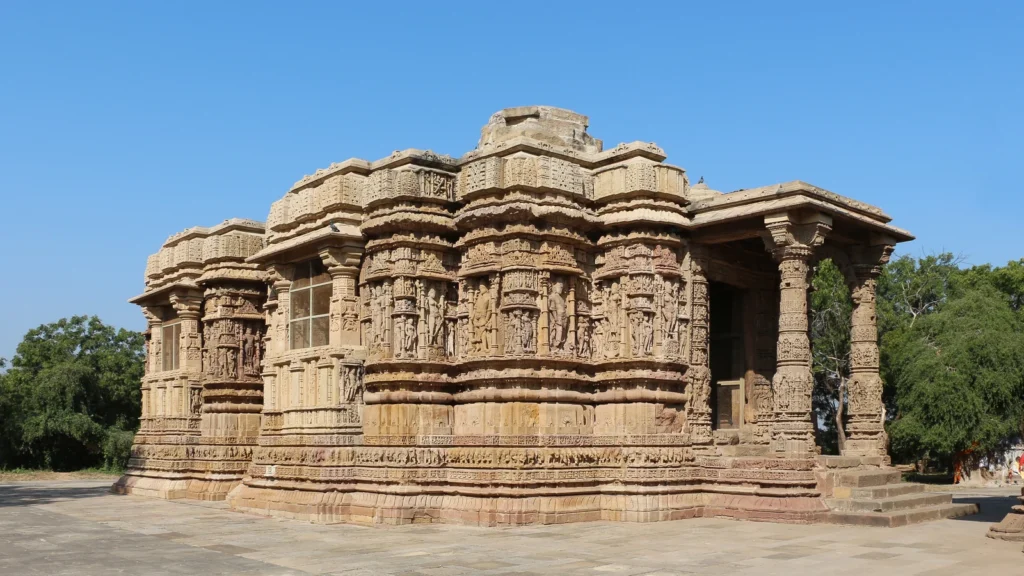
GANDHINAGAR — The Modhera Sun Temple, a 1,000‑year‑old landmark in Gujarat, has been transformed into India’s first 24‑hour solar village, a development that was spotlighted by Prime Minister Narendra Modi in his recent ‘Mann Ki Baat’ address. The initiative, which sees the village powered entirely by solar panels, is part of the country’s broader push to expand renewable energy infrastructure across rural areas.
From Ancient Architecture to Modern Energy
The temple, built in the early 11th century, has long been a symbol of the region’s rich cultural heritage. In 2026, the surrounding community of Modhera was equipped with a network of photovoltaic panels that supply electricity to homes, street lighting and public facilities 24 hours a day. The project was launched as a pilot under the Ministry of New and Renewable Energy’s rural electrification program, and it has been described by local officials as a model for integrating heritage conservation with sustainable development.
According to the coverage by The News Mill, the solar installation covers a total area of 3,500 square metres and is expected to generate approximately 1.2 megawatt‑hours of electricity each day. The panels are mounted on rooftops and on open ground, and the system is connected to the village’s existing distribution network. Residents report that the new supply has reduced their dependence on diesel generators and lowered electricity costs.
Political Recognition and Public Reception
Prime Minister Modi’s mention of Modhera in his ‘Mann Ki Baat’ broadcast on 28 September 2026 underscored the national significance of the project. In the speech, he highlighted the temple’s 1,000‑year journey from a historic monument to a living example of India’s renewable energy ambitions. The address was widely covered by national media, including ET EnergyWorld, which noted the PM’s emphasis on the village’s role as a “living laboratory” for solar technology.
Local leaders have welcomed the initiative. The chief minister of Gujarat, Bhupendra Patel, said that the project demonstrates the state’s commitment to sustainable development and heritage preservation. “Modhera shows that we can honour our past while building a cleaner future,” he said.
Impact on the Community and Heritage Conservation
The solar village has already begun to influence daily life in Modhera. Street lights turn on automatically at dusk, and community centers can operate during the night without the need for backup generators. The project has also created a small number of jobs in installation and maintenance, providing local employment opportunities.
From a heritage perspective, the initiative has been praised for its sensitivity to the temple’s surroundings. The solar panels are installed in a way that does not alter the visual integrity of the historic site, and the project has been coordinated with the Archaeological Survey of India to ensure compliance with conservation guidelines.
Future Plans and Replication
Officials have indicated that the Modhera model will be replicated in other heritage villages across the country. The Ministry of New and Renewable Energy has announced a funding scheme that will support similar projects in Rajasthan, Uttar Pradesh and Tamil Nadu. The goal is to create a network of heritage sites that are self‑sufficient in energy, thereby preserving cultural landmarks while advancing India’s renewable energy targets.
As the first of its kind, Modhera’s solar village sets a precedent for how India can merge its rich historical legacy with modern sustainability goals. The project’s success is expected to inspire further initiatives that blend cultural conservation with renewable energy deployment.