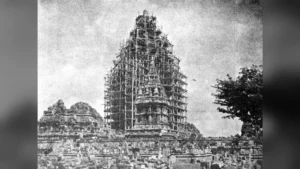
NEW DELHI — Prime Minister Narendra Modi and Indonesian President Joko Widodo inaugurated an India‑backed restoration of the UNESCO World Heritage‑listed Pram‑banan temple complex in Central Java on Sunday, Oct. 9, 2026. The project, funded by the Indian government, aims to preserve the 9th‑century Hindu shrine and reaffirm shared civilisational ties between the two nations.
Restoration marks deepening cultural partnership
The ceremony, attended by senior officials from both countries, highlighted a decade‑long cultural‑heritage partnership that includes joint research, skill‑exchange programmes and financial assistance for conservation work. India’s Ministry of Culture confirmed that the restoration, scheduled for completion in 2028, will address structural stabilisation, stone‑carving repairs and the installation of modern monitoring systems to protect the site from seismic activity.
Modi, speaking at the site, said the effort reflects “the enduring bonds that link our ancient civilizations and the responsibility we share to safeguard humanity’s heritage.” The president echoed the sentiment, noting that Prambanan “stands as a testament to the historic exchanges that have shaped our societies.” Both leaders called for continued collaboration on heritage projects across Asia.
Background of the Prambanan complex
Prambanan, a sprawling Hindu temple complex built in the 9th century, was inscribed on the UNESCO World Heritage List in 1991 for its architectural brilliance and cultural significance. The site has faced deterioration due to weathering, vegetation growth and occasional earthquakes. Earlier restoration phases were undertaken by the Indonesian government with assistance from UNESCO and several foreign partners.
India’s involvement began in 2023 when the Ministry of Culture announced a grant of ₹1.2 billion to support the next phase of conservation. The funding is part of India’s broader “International Cultural Heritage Initiative,” which seeks to strengthen diplomatic ties through heritage diplomacy.
Implementation and oversight
The restoration is being overseen by a joint task force comprising officials from India’s Archaeological Survey of India (ASI) and Indonesia’s Ministry of Education, Culture, Research and Technology. Technical experts from the ASI will work alongside Indonesian conservators to apply traditional stone‑carving techniques while integrating contemporary preservation technology.
According to the task force, the work will focus on three priority areas: (1) stabilising the central Shiva temple’s towering spires, (2) cleaning and repairing the intricate bas‑relief panels that depict Hindu epics, and (3) installing a seismic‑monitoring network to provide early warnings of structural stress.
Implications for bilateral ties
The inauguration follows a series of high‑level visits and agreements signed in 2025, including a memorandum of understanding on tourism promotion and a joint research programme on ancient maritime routes linking the Indian subcontinent and the Indonesian archipelago. Analysts note that cultural‑heritage projects such as this serve as low‑risk platforms for deepening strategic cooperation.
Both governments have indicated that the Prambanan restoration will be showcased during the upcoming ASEAN‑India cultural summit in 2027, providing a visible example of successful collaboration.