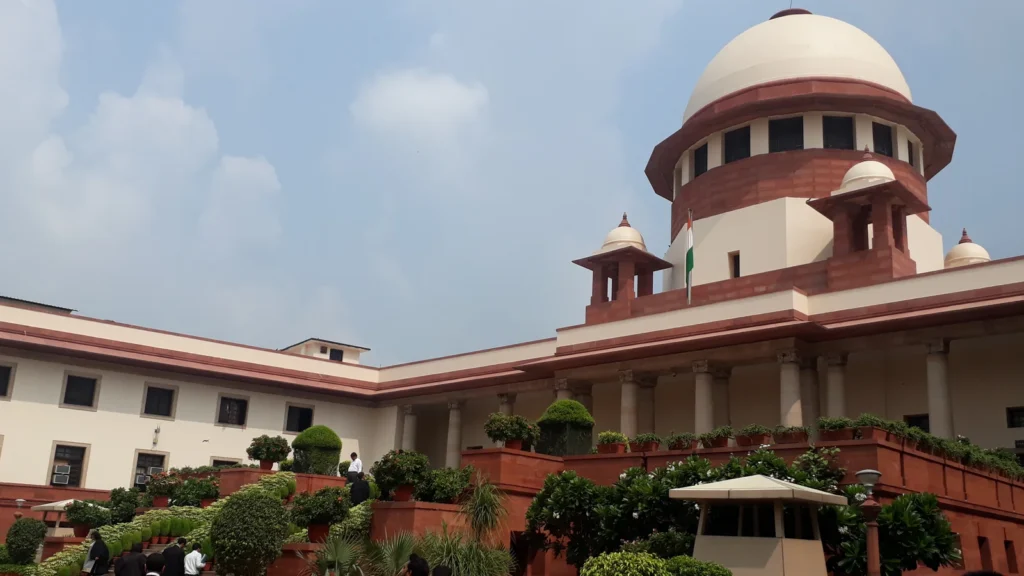
NEW DELHI — The Supreme Court on Tuesday declined to entertain a public interest litigation that sought a central law to curb bullying and ragging in schools. The petition, filed by a coalition of parents and education activists, argued that existing regulations were insufficient to protect students from harassment and physical abuse on campus.
Decision leaves current framework intact
The court’s order, issued on 28 September 2026, stated that the petition did not meet the criteria for a PIL under Article 32 of the Constitution. It also noted that the Ministry of Education had already issued guidelines under the National Education Policy 2020 to address ragging, and that these were being implemented by schools across the country.
Background on ragging concerns
Ragging, a form of bullying that can involve psychological intimidation, physical assault, or social exclusion, has long been a problem in Indian educational institutions. In 2015, the Supreme Court directed the Ministry of Human Resource Development to issue a comprehensive anti‑ragging policy, which was later incorporated into the National Education Policy 2020. The policy requires schools to establish anti‑ragging committees, conduct awareness programmes, and report incidents to the National Anti‑Ragging Committee.
Petition’s arguments
The petitioners claimed that the existing guidelines were not enforceable and that a statutory law would provide stronger deterrents and clearer penalties for offenders. They also cited recent incidents of severe ragging that resulted in student injuries and deaths, arguing that the law would help prevent such tragedies.
Supreme Court’s rationale
In its brief statement, the court said that the petition did not present a fresh legal question and that the current framework was adequate for addressing ragging. The court also noted that the Ministry had already taken steps to strengthen enforcement, including the appointment of anti‑ragging officers in schools and the introduction of a digital reporting portal.
Implications for schools and parents
While the court’s decision does not alter the existing guidelines, it underscores the need for schools to comply with the National Anti‑Ragging Committee’s directives. Parents and student bodies are urged to report incidents promptly and to participate in school‑wide anti‑ragging initiatives. The Ministry of Education has reiterated its commitment to monitoring compliance and to revising policies if necessary.
Primary Sources & Official Records
- Supreme Court refuses to entertain PIL for Central law, guidelines to curb ragging in scho
- SC refuses to entertain plea seeking law to curb bullying, ragging in schools – indiatoday
- Supreme Court Refuses to Stay Rajasthan Cricket Association Elections; Directs Results Not
- SC refuses to entertain PIL for Central law, guidelines to curb ragging in schools – ET Ed