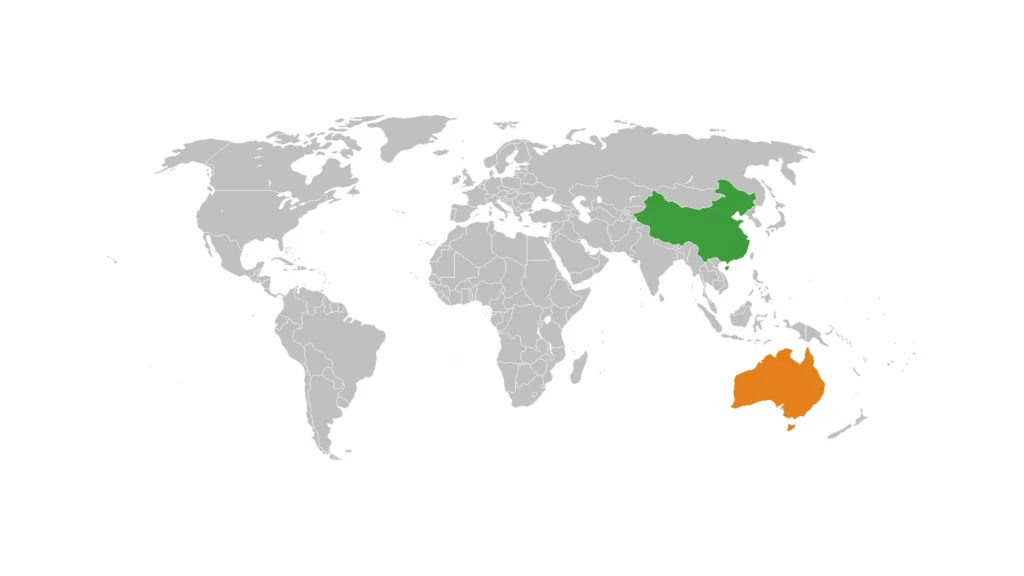
BRUSSELS — Australia is confronting a strategic dilemma as it seeks to uphold its defence partnership with the United States while maintaining vital trade relations with China, a situation described in a BBC analysis released on 28 September 2026.
Security commitments and alliance pressures
Australian officials have reaffirmed the country’s commitment to the Australia‑United States Free Trade Agreement and the AUKUS security pact, which includes joint development of nuclear‑powered submarines with the United Kingdom and the United States. The analysis notes that Washington expects Canberra to align more closely with its Indo‑Pacific strategy, particularly in response to Chinese naval activity in the South China Sea.
At the same time, Australian defence planners are wary of over‑reliance on any single partner, citing the need for a diversified security posture that can respond to a range of regional contingencies.
Economic interdependence with Beijing
China remains Australia’s largest export market, accounting for roughly 30 % of total merchandise exports in 2025, according to trade data referenced in the same BBC report. Key Australian exports include iron ore, coal, and education services, sectors that have faced periodic diplomatic friction over issues such as alleged foreign interference and calls for tighter investment screening.
The article highlights that recent Australian policy adjustments, such as the Foreign Investment Review Board’s stricter scrutiny of Chinese acquisitions, aim to protect critical infrastructure without triggering a broader trade war.
Diplomatic balancing act
Australian diplomats have pursued a “strategic autonomy” approach, engaging both Washington and Beijing in separate high‑level dialogues. The BBC piece cites a recent meeting in Canberra where senior officials from the Department of Foreign Affairs and Trade discussed the importance of “stable economic ties” with China while reiterating support for a rules‑based order in the Indo‑Pacific.
Analysts quoted in the Bloomberg opinion article from January 2026 argue that Australia’s position reflects a broader regional trend, where middle powers must navigate the competing influences of two “unrestrained empires.” The piece suggests that Australia’s ability to act as a bridge could enhance its diplomatic leverage, provided it manages domestic political pressures and external expectations effectively.
Domestic political context
Domestically, the Australian government faces scrutiny from opposition parties and civil society groups over its handling of Chinese investment and alleged espionage activities. Parliamentary hearings earlier this year examined the implementation of the Foreign Interference Transparency Scheme, a legislative measure aimed at increasing disclosure of foreign influence operations.
Public opinion polls referenced in the BBC analysis indicate a split view among Australians: while a majority support strong security ties with the United States, a substantial portion express concern about the economic repercussions of a hardline stance toward China.
Outlook
Looking ahead, the BBC report concludes that Australia’s foreign policy will likely continue to oscillate between security alignment with Washington and economic engagement with Beijing. The country’s capacity to maintain this balance will depend on its diplomatic agility, the resilience of its domestic political consensus, and the evolving strategic calculations of both superpowers.