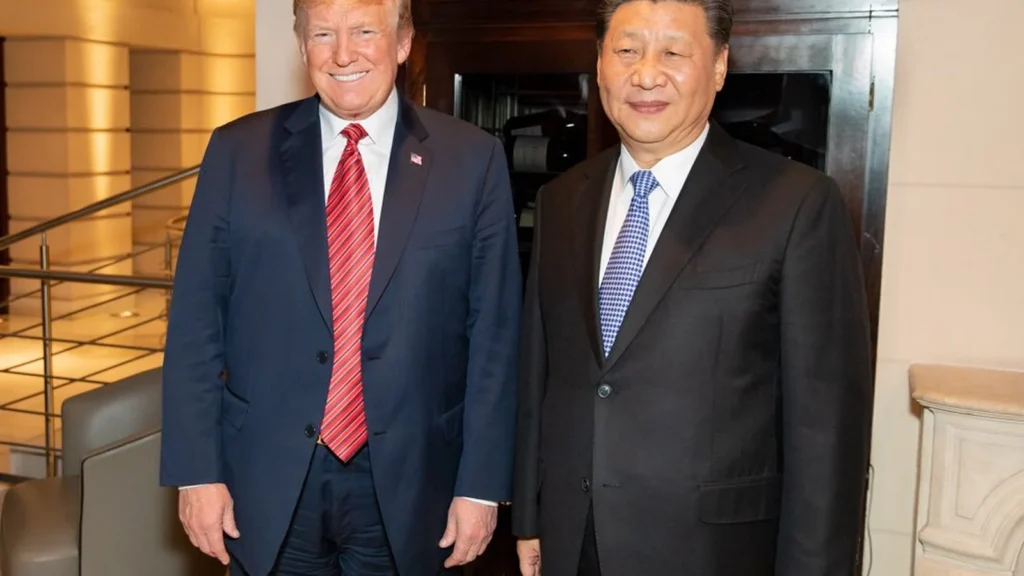
WASHINGTON — President Donald Trump and Chinese President Xi Jinping began a two‑day summit at the White House on Saturday, with officials saying the agenda will centre on trade, artificial‑intelligence regulation, Taiwan and the conflict in Iran.
Trade talks resume after years of tariffs
U.S. trade representatives indicated that both sides will seek to lower tariffs that have lingered since 2018, while also addressing non‑tariff barriers in sectors such as automotive parts and agricultural exports. The White House said the dialogue will explore a “balanced approach” that protects American jobs and opens Chinese markets for U.S. producers.
AI guardrails and technology competition
Analysts cited by Nikkei Asia expect the leaders to discuss “AI guardrails” and the broader technology race, including export controls on advanced chips and algorithms. The United States has proposed a framework to limit the transfer of AI‑related hardware that could be used for military applications, while China is expected to outline its own standards for responsible AI development.
Taiwan and regional security
Both presidents are slated to address the Taiwan issue, a long‑standing flashpoint in U.S.–China relations. The U.S. side is likely to reaffirm the “One China” policy while reiterating support for a peaceful resolution and the status‑quo across the Taiwan Strait. Chinese officials are expected to reiterate their opposition to any moves toward formal independence.
Iran conflict and broader Middle‑East concerns
Diplomats said the summit will also cover the ongoing war in Iran, where the United States and China have divergent positions on sanctions and nuclear negotiations. The United States is expected to press for a coordinated approach to curb Iran’s regional influence, while China may advocate for diplomatic engagement and the lifting of certain sanctions.
Domestic reactions and next steps
In the United States, business groups welcomed the prospect of reduced tariffs, while some lawmakers warned that any concessions must be tied to clear enforcement mechanisms on intellectual‑property theft. In China, state media described the meeting as “a historic step toward stabilising bilateral ties.” The White House announced that a joint communiqué will be released after the summit, outlining any agreements reached.