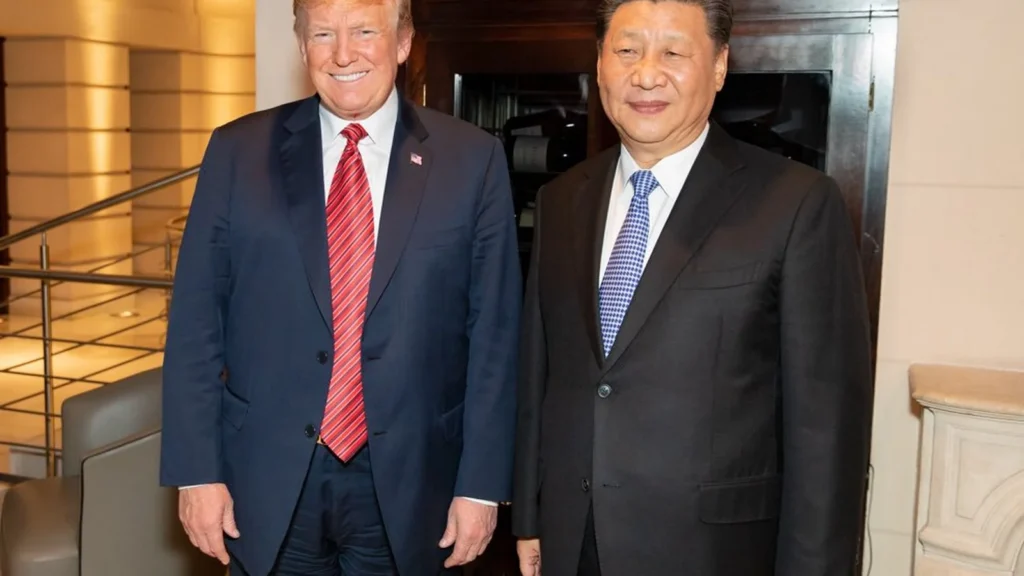
WASHINGTON — President Donald Trump presented Chinese President Xi Jinping with an ornate bald eagle statue during a state dinner held in Washington on Friday, a diplomatic gesture that underscored the high-stakes nature of their bilateral relationship and the symbolic significance of American iconography in high-level statecraft.
The gift, a meticulously crafted sculpture of the national bird of the United States, was presented in a formal ceremony that concluded a day of high-level diplomatic engagements. The bald eagle, a symbol of freedom, strength, and the American spirit, has long been a staple of US diplomatic gifting, yet its presentation to a head of state from a geopolitical rival carries distinct weight. The statue, described by officials as a piece of fine artistry, features the eagle in a poised stance, its wings partially spread, rendered in materials that reflect the prestige of the occasion.
Symbolism in Statecraft
Diplomatic analysts note that the choice of the bald eagle is not arbitrary. In the context of US-China relations, which have been marked by intense trade disputes, technological competition, and strategic rivalry, the gift serves as a reminder of the enduring, albeit complex, diplomatic channel between the two powers. The eagle, as a national emblem, projects an image of American resolve and sovereignty. By gifting this symbol to President Xi, the US administration signals a desire for engagement on its own terms, emphasizing the foundational values of the United States while acknowledging the importance of the relationship.
The state dinner itself was a carefully orchestrated event, featuring a menu that blended American culinary traditions with elements of Chinese cuisine, reflecting the cultural exchange that accompanies high-level diplomacy. The presentation of the statue was a highlight of the evening, drawing attention from the press corps and diplomatic observers. The gesture aligns with a broader trend in recent US diplomatic practice, where tangible gifts are used to convey specific messages and reinforce diplomatic narratives.
Context of Bilateral Relations
The exchange comes at a critical juncture in US-China relations. The two nations are engaged in ongoing negotiations regarding trade tariffs, technology export controls, and strategic security issues. The presentation of the eagle statue can be interpreted as a diplomatic overture, a means of maintaining open lines of communication amidst significant tensions. It reflects the US administration’s approach to managing the rivalry, combining firmness on core interests with a willingness to engage in high-level dialogue.
Chinese officials have historically responded to such gifts with formal gratitude, acknowledging the thoughtfulness of the gesture while maintaining their own diplomatic protocols. The statue is expected to be displayed in a prominent location within the Chinese leadership’s official residence, serving as a constant reminder of the diplomatic exchange. The move is seen as part of a broader effort to stabilize the relationship and prevent further escalation in areas of contention.
Experts in international relations suggest that such symbolic gestures play a crucial role in shaping the tone of bilateral interactions. They help to humanize the diplomatic process and provide a framework for understanding the perspectives of both sides. The bald eagle, as a symbol of American identity, serves as a tangible representation of the US commitment to its values and interests, while the act of gifting it to a foreign leader demonstrates a willingness to engage in mutual respect and dialogue.
Diplomatic Protocol and Precedent
The presentation of the statue follows established diplomatic protocols for state visits. Gifts exchanged during such occasions are carefully selected to reflect the cultural and political significance of the relationship. The bald eagle has been a popular choice for US diplomatic gifts, often presented to heads of state from allied and rival nations alike. Its use in this context underscores the importance of the US-China relationship in the global order.
The event was covered extensively by international media, with many outlets highlighting the symbolic nature of the gift. The reaction from diplomatic circles was generally positive, with many viewing the gesture as a constructive step in managing the complex dynamics of the US-China relationship. The statue, with its intricate design and powerful symbolism, is expected to become a notable artifact in the history of US-China diplomatic exchanges.
As the two leaders concluded their discussions, the presentation of the bald eagle statue served as a fitting end to a day of significant diplomatic engagement. It reinforced the message that despite the challenges and rivalries, the United States and China remain committed to maintaining a relationship that is essential for global stability and prosperity. The gesture, while symbolic, carries practical implications for the future of bilateral cooperation and dialogue.