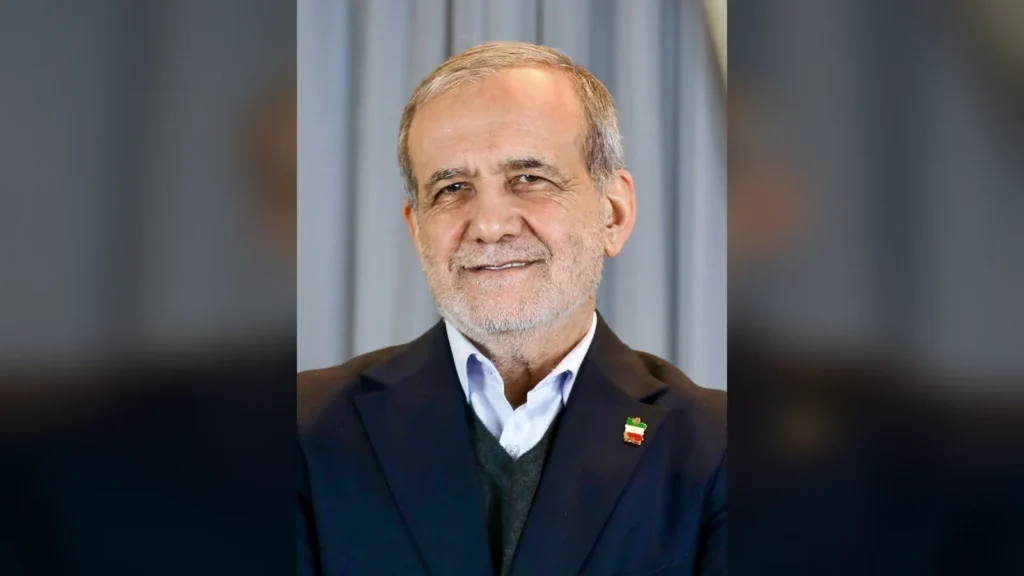
TEHRAN — Iran’s foreign minister, Mohammad Reza Pezeshkian, told reporters on 26 September that the country no longer trusts talks with Washington, a statement that could bring the long‑stalled nuclear negotiations to a halt. The comment came after the United States re‑imposed sanctions on Iranian oil exports earlier this year and after a series of diplomatic setbacks that have left the two sides at a dead end.
Break in Confidence Amid Stalled Negotiations
In a brief statement released by the Iranian Foreign Ministry, Pezeshkian said that Tehran had reached a point where it could not rely on the United States to honour commitments made in previous rounds of talks. The statement was reported by Al Jazeera, Yahoo News, BreakingtheNews.net and The Times of India, all of which noted that the minister’s remarks were made in a press briefing that was not accompanied by a formal written document.
The comment follows the U.S. administration’s decision in March 2026 to lift a series of sanctions that had been imposed in 2025 after the United States announced a new “maximum pressure” strategy on Iran. The sanctions targeted Iranian banks, shipping and oil companies, and were lifted only after a limited set of conditions were met. Iran had argued that the conditions were unrealistic and that the U.S. had not demonstrated a genuine willingness to negotiate.
Context of the Nuclear Deal
The 2015 Joint Comprehensive Plan of Action (JCPOA) had been the cornerstone of U.S.–Iran relations for a decade. After the U.S. withdrew in 2018, Iran began to step back from its commitments, prompting a series of negotiations that have been held in Geneva, Vienna and other venues. The latest round of talks, which began in early 2026, aimed to restore the JCPOA and lift the remaining sanctions. However, the U.S. has insisted on stricter limits on Iran’s nuclear enrichment and has demanded a comprehensive verification regime.
According to the Foreign Ministry’s statement, the Iranian government has grown skeptical of the U.S. diplomatic process. Pezeshkian said that Tehran had “no longer trust” in Washington’s willingness to engage in good faith. The minister’s remarks were interpreted by analysts as a signal that Iran may be prepared to walk away from the negotiations if the U.S. does not meet its demands.
Reactions from Washington
The U.S. State Department has not issued a formal response to the statement. A spokesperson for the department said that the United States remains committed to a diplomatic solution and that it is “working closely with all partners” to resolve outstanding issues. The statement was made in the context of a broader U.S. strategy to pressure Iran into compliance with international nuclear non‑proliferation norms.
Implications for Regional Stability
Experts warn that a breakdown in trust could have ripple effects across the Middle East. The United Nations has called for renewed engagement, while regional actors such as Saudi Arabia and Israel have expressed concern that a stalled agreement could lead to a new arms race. The European Union, which has been a key mediator in the JCPOA, has urged both sides to keep the dialogue open.
In the days following the statement, the Iranian Foreign Ministry issued a brief clarification that it had not called for a complete halt to negotiations but that it would not engage with the U.S. unless it could demonstrate a genuine commitment to a fair and transparent process. The ministry also reiterated its demand for the removal of all sanctions that it views as “unjust and disproportionate.”
Historical Precedent
Iran’s distrust of U.S. talks is not new. In 2015, the Iranian leadership expressed similar concerns during the JCPOA negotiations, citing a lack of reciprocity from Washington. The 2025 sanctions cycle saw a similar pattern, with Iran accusing the United States of “selective enforcement” and “political manipulation.” The current statement echoes those earlier positions, suggesting a continuity in Iran’s diplomatic strategy.
As the international community watches the situation unfold, the next steps will likely depend on whether Washington can address Iran’s concerns about fairness and reciprocity. The U.S. has indicated that it will not lift sanctions until it is satisfied with Iran’s compliance with the JCPOA’s verification mechanisms.