NEW YORK — U.S. President Donald Trump declared on Wednesday that the United States would seize control of Venezuela’s oil reserves, invoking the 19th-century phrase “to the victor belong the spoils” during his address to the United Nations General Assembly. The statement, delivered to a plenary session of world leaders, represents a significant departure from traditional diplomatic norms and signals a hardline approach to the ongoing political and economic crisis in the South American nation.
In his remarks, Trump explicitly linked U.S. military and economic leverage to the acquisition of Venezuelan state assets. He stated that the United States would manage the country’s energy sector directly, bypassing the current Venezuelan government led by President Nicolas Maduro. The President framed the move as a necessary measure to stabilize global oil markets and counter the influence of rival powers in the Western Hemisphere.
The address drew immediate scrutiny from international legal experts and diplomats, who noted that the claim to foreign sovereign resources lacks basis in international law. The United Nations Charter prohibits the acquisition of territory or resources through the threat or use of force. Several member states, including those in the Group of 77 and China, issued statements condemning the rhetoric as a violation of Venezuela’s sovereignty and non-interference principles.
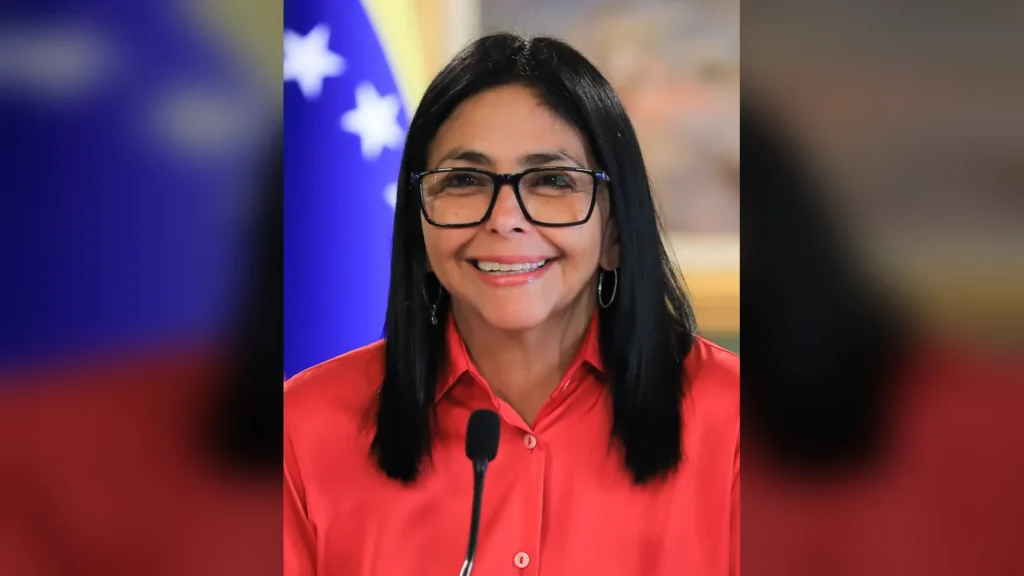
Venezuelan Vice President Delcy Rodriguez, who is currently serving as the acting head of state during Maduro’s absence, responded to the U.S. claims with a firm rebuttal. In a separate address to the General Assembly, Rodriguez described the U.S. position as an act of economic aggression and imperialism. She asserted that Venezuela’s oil resources belong to the Venezuelan people and cannot be appropriated by foreign powers. Rodriguez emphasized that her government would continue to defend national sovereignty through diplomatic channels and legal mechanisms.
The geopolitical implications of Trump’s statement are far-reaching. Venezuela holds the largest proven oil reserves in the world, estimated at over 300 billion barrels. Control over these reserves has long been a strategic objective for major energy consumers. The U.S. move threatens to exacerbate existing tensions with Russia and China, both of which have significant economic interests in Venezuela. Moscow and Beijing have previously provided financial and diplomatic support to the Maduro government, and analysts suggest they may respond with increased pressure on U.S. assets in the region.
Market reactions to the speech were mixed. Oil prices fluctuated in the hours following the address, reflecting uncertainty about the potential disruption to Venezuelan exports. Analysts noted that while the U.S. claim could theoretically increase supply, the political instability and lack of legal clarity would likely deter immediate investment. The International Energy Agency warned that such unilateral actions could undermine global energy security and complicate efforts to transition to cleaner energy sources.
Diplomatic channels have been activated in response to the escalating rhetoric. The U.S. State Department confirmed that it is in contact with key allies to coordinate a response to the Venezuelan situation. Meanwhile, the Organization of American States (OAS) is expected to convene an emergency session to discuss the crisis. Latin American leaders have expressed concern over the precedent set by the U.S. claim, fearing it could encourage similar interventions in other resource-rich nations.
The situation in Venezuela remains volatile. The country has been grappling with severe economic hardship, political repression, and a humanitarian crisis for years. The U.S. interventionist stance adds another layer of complexity to an already fragile environment. Human rights organizations have called for a peaceful resolution and urged all parties to respect international law and the rights of the Venezuelan people.
As the General Assembly sessions continue, the focus remains on the diplomatic fallout from Trump’s address. The coming days will likely see intensified negotiations and countermeasures, with the potential for further escalation if no compromise is reached. The international community is watching closely to see how this confrontation will shape the future of U.S.-Venezuela relations and the broader geopolitical landscape.